

Introduction
Tornadoes in 2026 are becoming more unpredictable and destructive than ever before. The US has recorded above 1200 tornadoes each year in the recent past and some of them have up to 200 mph winds that are so strong that they can level neighborhoods in seconds. This is a very worrying trend that has elevated storm safety from a luxury to a must-have tool for families residing in areas with tornadoes.
House owners are now resorting to the use of engineered shelters instead of using basements only. Although the cellar provides certain protection, the basement does not comply with the standards of FEMA safety, which demands maximum security. This is the reason why the need to acquire underground storm shelters and above-ground safe rooms has been increasing in demand in such states as Oklahoma, Texas, and Kansas.
It is not only a matter of the cost but of life and death to choose the right type of shelter. The underground units offer natural protection under the ground and the above-ground shelter provides convenience for the seniors, children or disabled persons. As both of them are now built to withstand winds of up to 250 mph, the families of the 2026 generations will have more options to choose from to efficiently protect their loved ones.
Why Tornado Shelters Are More Critical Than Ever
Tornadoes Are Becoming More Destructive
The US has been witnessing deadlier and stronger tornadoes contrary to previous decades. Having more than 1,200 tornadoes per year, recent years have recorded a frightening increase in the instances of EF-3 to EF-5. These storms may blow houses down, blow cars around like toys and the debris may fly at 200+ mph. A tornado shelter can be considered a lifesaver for homeowners who cannot afford to leave their homes at the mercy of luck.
A lot of people think that a basement provides sufficient protection but it is a dangerous myth that people have. Basements are prone to flooding, collapsing walls, as well as falling debris. In comparison, engineered tornado shelters are specifically made and tested to sustain disastrous wind and the impact of debris. The variation between a basement and a FEMA-qualified unit may be a matter of life and death.
The Basement Myth vs. Engineered Shelters
A lot of people think that a basement provides sufficient protection but it is a dangerous myth that people have. Basements are prone to flooring, collapsing walls and falling debris. In comparison, engineered tornado shelters are specifically made and tested to sustain disastrous wind and the impact of debris. The variation between a basement and a FEMA-qualified unit may be a matter of life and death.
What Is the Safest Tornado Shelter?
The safest alternative would be one that meets FEMA and ICC-500 safety requirements. Underground storm shelters, as well as above-ground safe rooms, can be considered as such provided they are rated to withstand winds of 250 mph or higher. The shelters are put to extreme conditions and therefore the families are guaranteed the maximum protection they can get. In the matter of storm safety in 2026, it is vital to identify a FEMA-approved unit.
| Feature | Basements | FEMA-Certified Tornado Shelters |
| Protection from Debris | Limited; walls may collapse under high winds or flying debris | High; engineered to withstand 250 mph winds and heavy debris impact |
| Flood Risk | High; prone to flooding in heavy storms | Low; properly sealed and elevated or waterproofed |
| Structural Safety | Not tested to FEMA or ICC-500 standards | Fully tested and certified to meet FEMA & ICC-500 standards |
| Accessibility | Easy to access but may require stairs | Varies above-ground shelters are highly accessible and underground shelters may need stairs or a ladder |
| Installation Cost | Usually included with home construction | Extra charge (3000-30000 +) based on type and size. |
| Lifespan & Maintenance | Varies; subject to home foundation issues | 20–50 years with routine |
Underground Storm Shelters, Pros, Cons, and Prices
What are Underground Storm Shelters?
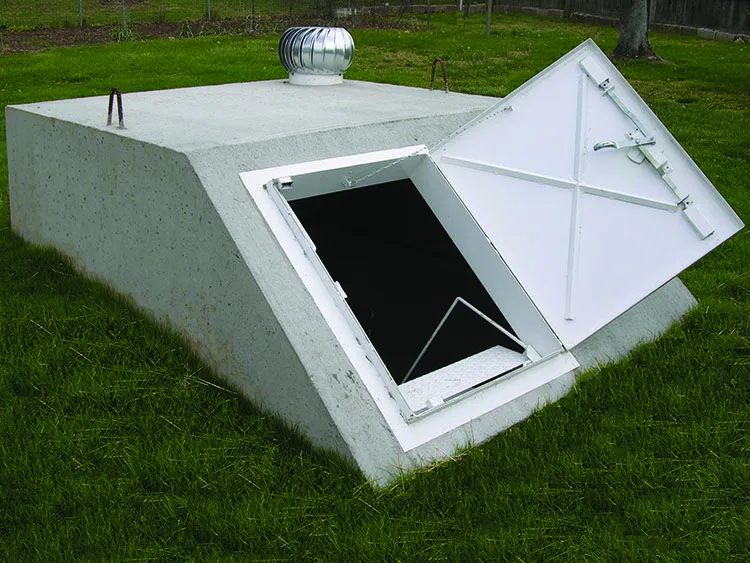
Underground storm shelters are constructed at the ground level to offer maximum protection against tornadoes and other harsh storms. These units are normally located in a backyard, garage floor or near the foundation of a home. Their burial under the soil means that they take advantage of natural insulation and protection of structures and they are therefore one of the best defense methods in case of violent weather.
Key Benefits of Underground Shelters
The advantage of underground storm shelters is that they are resistant to the extreme impact of debris. They are situated at the ground level and are not exposed to objects that fly, collapsing buildings and direct pressure of wind. They also keep a more stable temperature as the soil is insulated, and this makes them more comfortable during any long cut-offs. To most of the homeowners, this kind of shelter is the gold standard in terms of tornado protection.
Potential Drawbacks to Consider
Underground units have their own issues though they have advantages. The problem of accessibility also matters since older adults or physically challenged people may not be able to go up stairs or ladders in case of an emergency. The other negative effect is the chances of flooding that occur mostly in high water table areas or insufficient drainage. The process of installation may also be complicated and it may demand excavation, concrete reinforcement and proper preparation of the site and pushing the prices up.
Tornado Shelters Prices in 2026
The tornado shelters have prices that vary with the size of the shelters, the materials, and the installation type. The cost of an underground tornado shelter ranges between $4000-$35000 and above, based on size and type, which may be a small fibre structure or a big strengthened concrete structure.
The price can be raised by premium shelters that have high-quality ventilation, hard-duty reinforced doors, and back-up power. But the long-term safety savings and the tranquility associated with the installation of tornado shelters make the installation of tornado shelters a worthwhile investment for most homeowners.
| Shelter Size | Typical Capacity | Materials | 2026 Price Range (USD) | Notes |
| Small | 1-2 people | Fiberglass or Steel | $4,000-$9,000 | Compact units designed for small spaces, including tight yards or indoor placement |
| Medium | 3-6 people | Reinforced Steel or Concrete | $9,000-$20,000 | Family shelters that provide equal space and protection are popular in the backyards. |
| Large | 7+ people | Reinforced Concrete with Steel Doors | $20,000-$35,000+ | Upgraded ventilated custom luxury shelters, backed with power, and extended. |
Above-Ground Shelters: Are They Just as Safe?
What Is the Safest Tornado Shelter?
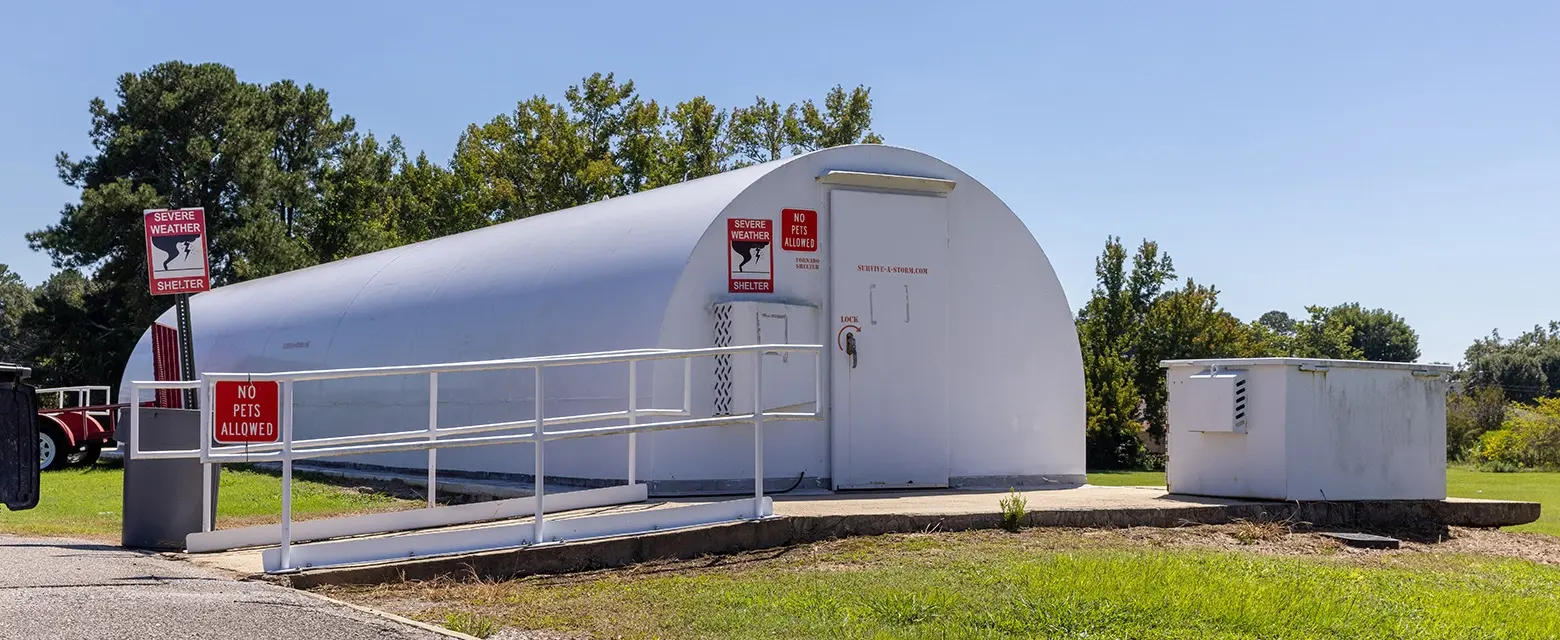
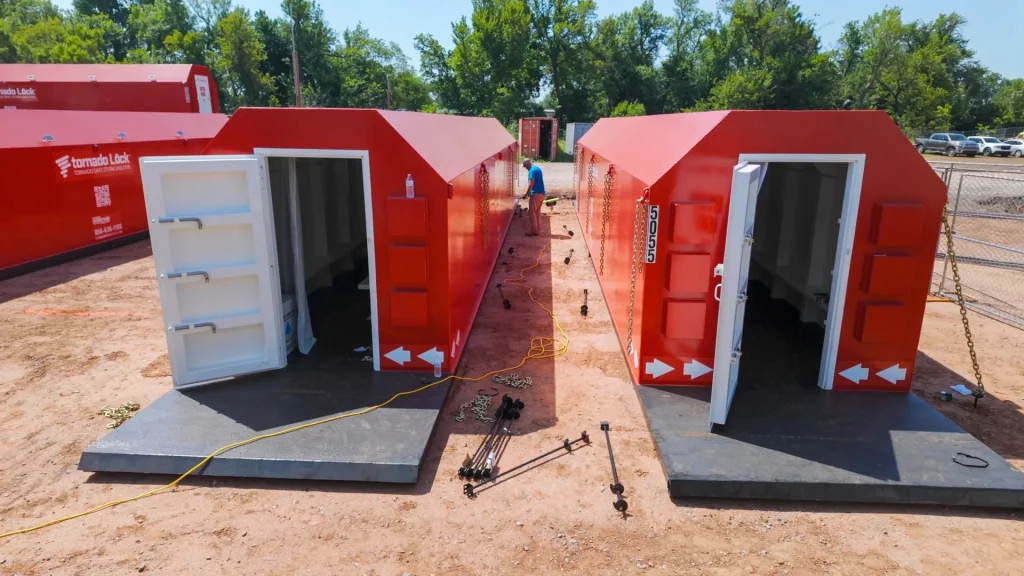
The most common question by most homeowners is What is the safest Tornado shelter? The answer may surprise you. Not only are underground units in use, but the above-ground storm shelters, which comply with FEMA and ICC-500 requirements, can equally withstand EF-5 tornadoes. They are designed to hold up to 250mph winds and the savage force of flying debris when constructed appropriately.
Meeting FEMA and ICC-500 Standards
The current above-ground shelter units are designed to similar high standards as those of the underground units. They are provided with reinforced steel or fiberglass walls, impact-resistant doors and heavy anchorages that prevent uplift. These certifications assure that a safe room that is placed above the ground is just as good as the one that is installed underneath the ground.
Above-Ground Tornado Shelter Prices in 2026
Another element influencing demand is price. The price of most above-ground storm shelters ranges from $5000 to $22000 in 2026, influenced by factors such as size, materials used and level of customization. Prefabricated steel structures often belong to the lower price range, while larger fiberglass or custom safe rooms fall into the higher price category. Such shelters are favored due to the fact that they do not need to be excavated to conserve on the time taken to install the shelters and the general cost of labor.
Who Should Consider Above-Ground Shelters?
The above-ground shelters are a brilliant option for families due to accessibility. The elderly, disabled and families with young children would normally prefer above-ground units as it does not require any stairs or ladders. They are installed in garages, basements or even as standalone backyard units, which offer fast and secure access in the event of an emergency, which is very important when time is of the essence.
| Feature | Above-Ground Shelters | Underground Shelters |
| Protection Level | High; built to FEMA and ICC-500 standards for wind and debris impact | Very High; soil coverage provides natural shielding from extreme winds and debris |
| Accessibility | Excellent; easy entry for seniors, children, and wheelchair users | Moderate; stairs or ladders required, less convenient for mobility-limited occupants |
| Installation Cost | $5,000-$22,000 | $9,000-$35,000+ excavation and site preparation increase costs |
| Installation Complexity | Faster and simpler installation with minimal site disruption | Complex; needs excavation, reinforced concrete, drainage, and waterproofing. |
| Flood Risk | Low; installed above grade, reducing flood exposure | Moderate to High; it varies according to the type of soil, drainage, and water table. |
| Maintenance Requirements | Rudimentary repairs such as door gaskets and vents. | Increased maintenance such as waterproofing, structural, and moisture. |
| Expected Lifespan | 20–50 years with proper maintenance | 30–60 years with professional installation and long-term care |
Tornado Shelter Prices by Type in 2026
Storm Bunkers
Another option of tornado shelters that are the most enduring and safest in the year 2026 is storm bunkers. These shelters are commonly constructed with concrete reinforced or heavy steel and are constructed deep in the ground to offer maximum resistance to severe winds, flying debris and structural collapses.
Generally, storm bunker prices are between $9,000 and $35,000 and above, depending on the size, materials, depth and other installations like ventilation systems, backup power, Air conditioning system and high security reinforced doors in 2026. Storm bunkers are more expensive to install, but are generally regarded as the gold standard of storm protection and extended housing security.
Safe Rooms Inside Homes
Safe rooms are an emerging popular choice of tornado shelter. Set up in homes, usually in the basement, in closets or garages, these rooms are constructed to FEMA P-320 standards and are impact tested. The prices would be cheaper as opposed to the custom-built safe rooms, which would be pricier. They also increase property value and are, hence, a good long-term investment.
Community Tornado Shelters
Some communities are banding together for safety. Community shelters are becoming common in places where tornadoes are likely to occur, especially in municipalities, schools and neighborhoods. Such large-capacity units are frequently supported either by local programmes, FEMA grants or cost-sharing between residents. Although the prices of individual ones differ, community shelters may also be a cheaper means of obtaining protection without having to pay the installation expenses on your own.
Low-Cost Tornado Shelter Options
Not every family needs or can afford a large custom unit. Low-cost tornado shelters such as prefabricated steel pods, garage floor models or small under-bed units cost as little as $2500 to $7000 to those who are budget-conscious in nature and own their own homes. Even smaller in size, these options can satisfy the safety requirements and be reliable in case of proper installation. This is the appropriate balance between economy and security for many.
| Shelter Type | Typical Cost Range (2026 USD) | Notes |
| Storm Bunker | $9,000-$35,000+ | Reinforced concrete or steel, installed deep underground for maximum protection |
| Safe Room (Inside Home) | $3,500-$14,000 | Set in a basement, a closet or a garage, a lot of models are FEMA-approved. |
| Community Shelter | Varies; cost shared | Municipal, school, or neighborhood pools have large capacity shelters. |
| Low-Cost Tornado Shelter | $2,500-$7,000 | Ready-built units, garage-based, or smaller under-bed space, and customized to low-cost protection. |
Tornado Shelter Material in 2026
The choice of an appropriate tornado shelter material will determine durability, cost and safety. In the year 2026, most shelters are also made of reinforced concrete, steel or fiberglass. The reinforced concrete offers maximum protection and maintenance, which is best with underground bunkers. Steel is robust, sturdy and is commonly used in above-ground shelters or prefabricated shelters.
Fiberglass is lighter in weight, corrosion-resistant, and can be installed with ease. Yet it can provide a little less protection against extreme debris. The choice of the material will guarantee that your shelter is FEMA and ICC compliant while fitting into your budget and installation needs.
Tornado Shelter Cost by Location in 2026
Location plays an important role in tornado shelter costs. The prices are different depending on the regional labor rates, building codes in the area, soil type, and accessibility. The demand may push the cost of materials and installation in the case of tornado-prone states such as Oklahoma, Kansas, and Texas. Cities tend to charge more permits and labor as opposed to the countryside.
Cost by location will enable a homeowner to make the right choice of shelter and plan properly in the location where the shelter will be constructed. Researching local prices in 2026 will make you sure that your investment in a Tornado shelter will be as safe as possible and will not have a single surprise.
Installation Costs and Factors to Consider
How Much Does It Really Cost to Install a Tornado Shelter?
The buying price is not the entire equation. Depending on whether you are spending on a luxury bunker or a low-cost tornado shelter, the installation cost will add thousands to your overall budget. Homeowners spending in 2026 will average $2500 to $12000 or more on top of installation costs, that depending on complexity, location, and permits.
Why Site Preparation Matters?
Underground shelters need a lot of prior preparation before they can be regarded as safe. It should be excavated, concrete made reinforced and well-drained to avoid collapse or flooding. When the soil in the place where you live is rocky or your water table is too high, the price can go up fast, as additional work and waterproofing are necessary.
Delivery and Installation Logistics
The logistics of the transport and installation of a heavy unit of steel or concrete are not easy. Huge machinery, cranes or transportation specific to the task can be required, and it increases the bill. Installation programs above shelters are generally less labor-intensive. In contrast, underground units are more expensive to install, hence the different costs of installation.
Permits and Local Regulations
Forget about permits and code compliance. Depending on the state and county, there is a need to obtain permits to build tornado shelters and the prices may vary between a few hundred dollars and more than a thousand dollars. Getting your unit to the FEMA and ICC-500 standards is not only a safety requirement but in many cases, it is a legal requirement as well.
Additional Costs to Consider in 2026
The purchase price of a tornado shelter is only part of the total cost. Other costs can include permits, excavation, preparation of the site, labor, ventilation, backup power, and custom doors. When it comes to underground shelters, excavation and waterproofing may end up being several thousand dollars higher.
The above-ground shelters may require slightly less work, but they have to be adequately fixed and comply with the local requirements. These extra expenses should be planned in 2026 so that nothing comes out of the blue and the installation is done well. Proper budgeting makes your investment in the tornado shelter a savings that is safe.
Safety vs Cost Comparison to make the Right Choice.
Underground or Above-Ground: Which One is Better?
There is a matter of underground and above-ground tornado shelters, which is a matter of priorities. Maximum protection is offered in underground units due to the use of soil as a barrier against debris and high winds. They can, however, be even harder to access and to install. The safe rooms which are above the floor are easier to open in the short term and they can house the aged, children or those with mobility issues. They are as safe as they should be provided they are in accordance with FEMA standards.
Cost vs. Long-Term Safety Investment
It is not simply a matter of how much a storm shelter on top of the ground costs, but of what the value is. Above-ground shelters can cost between $5000 and $22000 in 2026, with the underground shelters costing between $9000 to $35000 and above. The initial price may be expensive to bear, but these shelters should last 30 to 60 years with a well-maintained structure. This way is an investment in your family’s safety that cannot be compared with the cost of buying a second time around.
Insurance and Resale Benefits, which Reduce Hidden Values
In addition to safety, the tornado shelters may provide monetary benefits. Several insurance firms are providing cheaper premiums to houses with FEMA-approved shelters. The well-built safe room or bunker in the tornado-prone state will also add value to your home when bought, as the buyers will consider it as a high-demand safety feature. This implies that not only is your family safeguarded with your investment, but your investment can even pay back in the long term.
Maintenance and Longevity of Storm Shelters
How Do You Maintain Your Storm Shelters All Year Round?
It is very important to perform regular maintenance to make sure that your shelter can be counted on at the time when disaster strikes. Check seals, doors and ventilation systems regularly to avoid corrosion, leakages or air quality concerns. The underground storm shelters, especially, must be checked to have the presence of moisture or structural strain. Regular maintenance will ensure that your unit will continue to be FEMA-approved for many years ahead.
What Emergency Supplies Should You Stock?
Are you prepared in your shelter in case of a genuine tornado disaster? It is better to have the necessary supplies such as water, non-perishable food, first-aid kits, flashlights, radios, and power backup to survive a storm safely. The security of any underground or above-ground shelter depends on the preparedness for an emergency in the shelter. Periodical supply to ensure it is fresh and useful.
How Long Will Your Storm Shelter Last?
Are tornado shelters a short-term solution or long-term investment? Most of the units last between 20-50 years with good care and proper installation. Strengths such as reinforced steel and concrete are resistant to environmental degradation and also last long. In contrast, fiberglass shelters might need slight maintenance after a period. With an investment in quality and a basic maintenance program, a simple maintenance program can save generations in your tornado shelter.
Read this: 5 Basic Classifications of Lumber Types & Applications
Real Costs of Storm Shelter Installation in the USA (2026 Data)
Regional Cost Differences
Did you know storm shelter prices change very widely according to the location where you live? The residents of the South and Midwest, where the frequency of tornadoes is high, frequently pay less to install it compared to the cost in the coastal states, where installation costs may be higher due to labor and permits. The kind of soil, the potential of flooring and the local rules are price factors, so finding out how much it costs in the area, it is necessary to investigate the regional averages.
Average Installation Costs by Shelter Type
The data produced on the average installation cost assists the homeowners in budgeting adequately. In 2026, you can expect:
- Underground shelters: $9000-35000, depending on the area, the material and size of construction.
- Above-ground shelters: cost $5000 to $22000 on steel shelters or fiberglass.
- Safe rooms: $3500 -14,000 are commonly located within a house or a garage.
- Custom luxury shelters: More than 50000 with premium materials, air-conditioning, off-line power and custom designs.
It does not matter which type of underground bunker or an accessible unit placed above the ground, or a tiny safe room; it is better to be aware of the costs in advance so that the process of installation will proceed without any disruptions. You do not have to realize that some costs can be really high.
Conclusion
By spending money on a tornado shelter in 2026, you will not only be investing in a safety tool but also a long-term security plan for your family. As much as you can, either opt to buy underground storm shelters or above-ground safe rooms; the differences in cost, accessibility, and FEMA certification are in themselves the key to making the right choice in regards to your home and loved ones. The prices of compact units are as low as $2,100, and luxury custom shelters also sell for over $50,000, which is why there is a solution to almost any budget and type of property.
We should not wait until we have a disaster. As a homeowner, a person worried about protecting their future, their peace of mind and their family and it is important to choose a FEMA-approved tornado shelter today. Call and make a personalized estimate and get professional advice on where to find the ideal storm shelter.
Want to gain more knowledge about the Lubmer Estimation? Read our blog now: Everything You Need to Know About Lumber Grades
FAQs About Tornado & Storm Shelters
What is the safest tornado shelter in 2026?
A: FEMA-approved above-ground and underground storm shelters can be the safest ones in case they are installed correctly. They are actually tested to endure winds up to 250 mph and withstand debris collisions so that they offer the maximum protection to the family in case of a severe tornado occurrence.
What is the cost of an above-ground torm shelter?
The price of most above-ground tornado shelters is between $5000-$20000, of which the costs vary with size, materials and other added quality such as reinforced doors, ventilation and more. Ready-made units are usually cheaper, whereas custom-made designs may be expensive.
Do underground storm shelters have a higher level of safety than above-ground shelters?
Both categories can be equally safe when they are within the FEMA standards. The decision made varies depending on the location, soil type, the risk of floods and accessibility. The shelters that provide the greatest protection against the debris are underground. In contrast, the above-ground shelters are more conveniently accessible to the seniors or those with mobility difficulties.
Is it possible to have a cheap tornado shelter?
Yes, the options in the lower price range are fabricated units, in-garage installations or small under-bed shelters, priced at about $3000-$6000. They are also safe options and the best fit to be used by families that value affordable protection without violating safety rules.
Do storm shelters increase home value?
Absolutely. The houses equipped with the FEMA-approved tornado shelters also attract more buyers in the tornado-prone localities. They offer extra security, peace of mind and have a positive contribution to resale value.
How long is the storm bunker?
Storm bunkers of proper construction with maintenance have the potential to last 30-50 years. Periodicals of ventilation, seal checking and structural integrity will allow them to last longer and maintain the integrity and safety of occupants.