

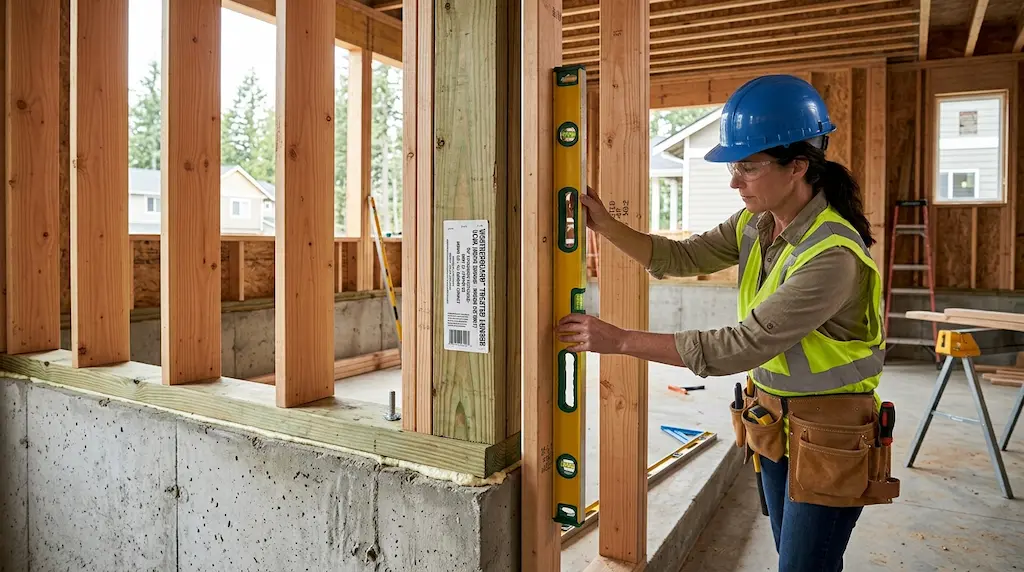
Pressure-treated wood is safe for most indoor framing and structural uses when it carries the correct AWPA Use Category rating for interior exposure. Modern preservatives like borate and copper azole replaced the arsenic-based chemicals banned for residential use in 2003. Builders now specify treated lumber for sill plates, subfloors, and damp-prone framing, without the leaching risks associated with older formulations. According to USDA Forest Service research on borate diffusion, boron penetration exceeded 70 percent of a stud’s cross section after 26 weeks in a humid indoor environment, confirming the preservative stays active exactly where builders need it most.
What Is Pressure-Treated Wood?
Pressure-treated wood is lumber forced under vacuum pressure to absorb a chemical preservative deep into its cell structure. The following key characteristics explain how this treatment process delivers long-term performance:
- Cellular Infusion: Vacuum-pressure processing forces chemical preservatives deep into the wood’s fiber structure, saturating the full cross section rather than just the outer layer.
- Core Protection: Unlike topical sealants that leave inner wood vulnerable once cut, pressure-treated lumber maintains internal resistance, though field-applied preservatives are still required on exposed cut faces.
- Biological Resistance: The retained chemical solution provides active defense against fungal decay, rot, and subterranean termites that rapidly degrade untreated framing.
- Moisture-Prone Applications: Specified primarily for structural members in direct contact with concrete or subjected to chronic high-humidity environments.
How Does the Pressure Treatment Process Actually Work?
Pressure treatment works by sealing lumber inside a steel cylinder, pulling a vacuum to remove trapped air, then flooding the chamber with preservative under high pressure. The chemical drives into the wood’s cellular structure instead of just coating the surface.
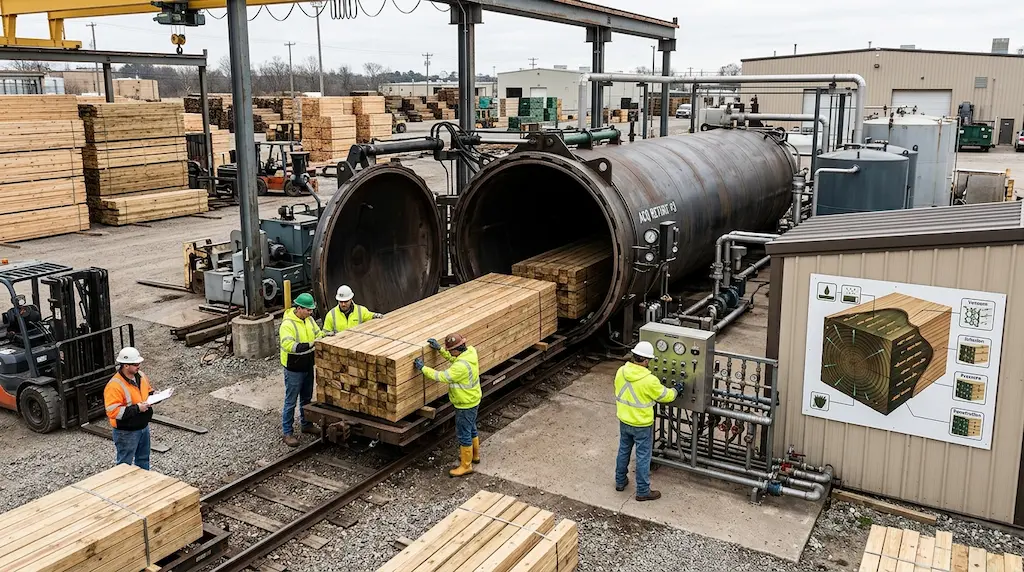
- Vacuum stage: Air is pulled from the wood cells to create space for the preservative
- Pressure stage: The chemical solution is forced into the empty cells under several hundred pounds of pressure
- Post-treatment drying: Kiln-dried after treatment (KDAT) lumber is dried again to a stable moisture content before shipping
- Retention testing: Mills sample boards to confirm the preservative retention meets the pounds-per-cubic-foot standard for the assigned Use Category
- End-tag certification: Every certified board receives an ink stamp showing the treating company, preservative type, and AWPA Use Category
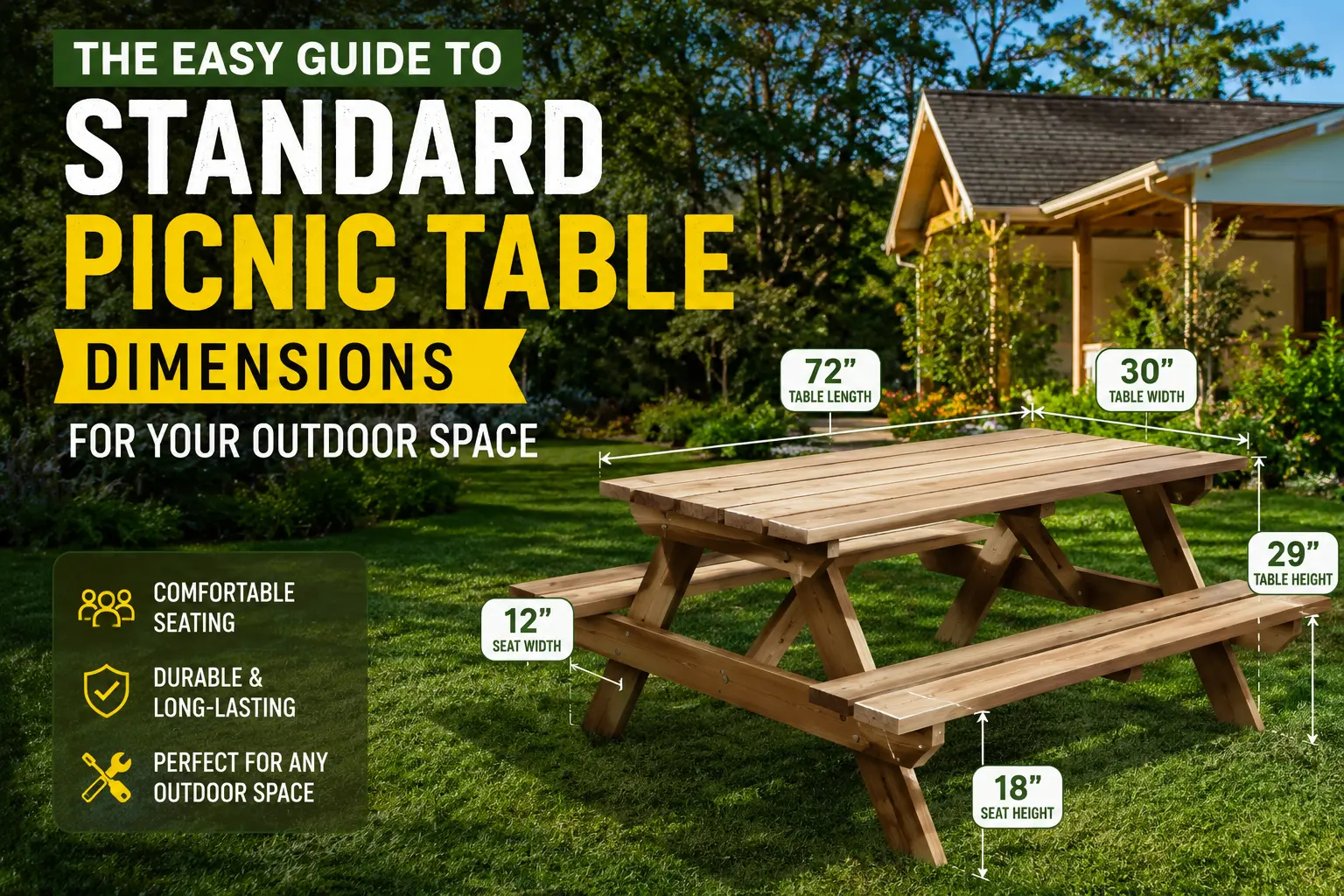
Read More: Standard Picnic Table Dimensions
Which Common Chemicals Are Used in Pressure Treatment?
Preservative choice depends on the environment and moisture levels. Protection strength is measured in pounds of active ingredient per cubic foot (pcf). Indoor borate framing starts at 0.28 pcf for above-ground use, increasing for heavy loads or high termite risks.
Which Chemicals Dominate Indoor Applications?
SBX (sodium borate) is the standard choice for dry interior framing because it is odorless, non-corrosive to standard fasteners, and effective against both drywood and subterranean termites. Trade names such as Bora-Care and ProWood Borate use this formulation.
What Handles Damp Indoor Zones?
Copper Azole (CA-C) and Alkaline Copper Quat (ACQ) step in only when the indoor space carries real moisture risk, such as a basement subfloor or a plumbing chase. Both are copper-based and demand corrosion-resistant fasteners, unlike borate systems.
| Preservative | Typical Indoor Use | Fastener Requirement | Corrosive to Metal |
| SBX Borate | Dry framing, sill plates, subfloors | Standard fasteners | No |
| Copper Azole (CA-C) | Damp basements, crawlspace-adjacent framing | Hot-dip galvanized or stainless | Yes |
| ACQ | High-moisture subflooring | Hot-dip galvanized or stainless | Yes |
| Creosote | Not permitted indoors | N/A | N/A |
According to the EPA’s overview of wood preservative chemicals, creosote has no registered residential use and is prohibited from any wood intended for interior applications.
What Do Building Codes Require for Indoor Treated Wood?
Building codes require preservative-treated lumber whenever interior wood framing contacts concrete, masonry, or damp ground. The International Residential Code Section R317 sets the specific triggers that every framing crew should know before rough-in inspection. A permit application for load-bearing framing work should name the specific AWPA Use Category on the plan set, since inspectors check that detail against the physical end-tag rather than taking a contractor’s word for it.
- Sill plates and sole plates resting directly on a concrete or masonry foundation must be preservative-treated.
- Floor joists closer than 18 inches to exposed ground require treated lumber or naturally durable species.
- Wood girders closer than 12 inches to exposed ground fall under the same requirement.
- Wood columns closer than 8 inches to exposed ground must be treated or naturally decay-resistant.
- Every treated board must carry an end-tag from an ALSC-accredited inspection agency.
- Framing inspectors check end-tags during rough-in, before drywall goes up.
- Fire-retardant-treated wood (FRTW) is required for certain roof trusses and partition assemblies under UCFA and UCFB categories.
- Fastener specifications must match the engineer-of-record’s submittal for copper-based treatments.
- Local Authority Having Jurisdiction amendments can extend these requirements beyond the base IRC language.
- Permits for load-bearing framing changes must document the specified AWPA Use Category.
Which EPA-Registered Preservatives Belong Indoors?
Only preservatives with an active EPA registration for residential use belong in an indoor structure, and that currently means borate and copper-based systems, not the older arsenical treatments.
UC1 Versus UC2 Interior Categories
AWPA Use Category 1 (UC1) covers fully protected, permanently dry interior framing. Use Category 2 (UC2) applies where condensation, occasional dampness, or contact with a concrete slab is likely. According to AWPA’s Use Category System guide, specifiers select between these two categories based on expected service conditions before a single board ships from the mill.
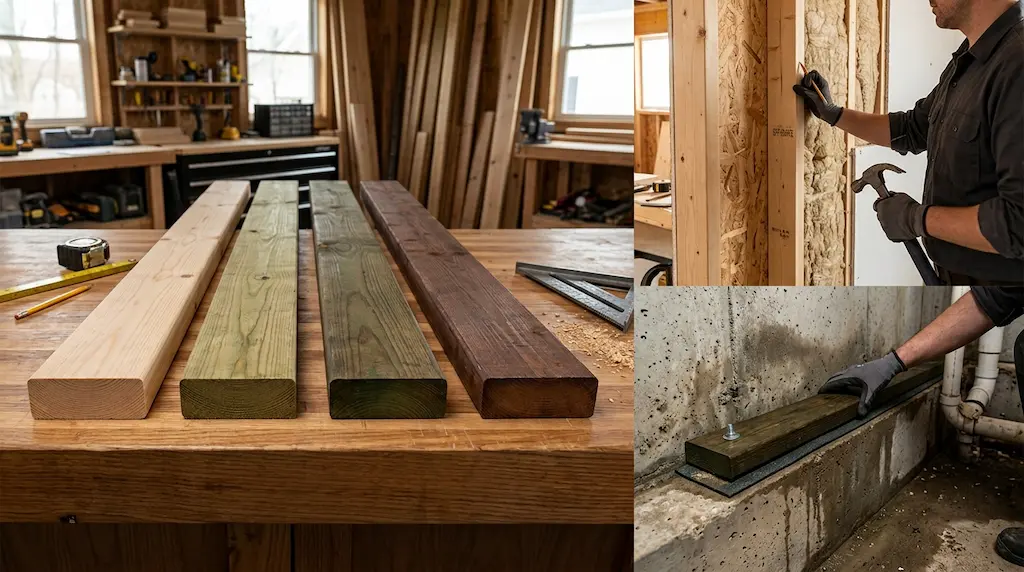
Reading the End-Tag Before Installation
Every compliant board carries a stamp listing the treating company, preservative code, and Use Category. According to AWPA’s homeowner guidance, the designation “AWPA U1” on that tag confirms the lumber was treated to the association’s current standard rather than an outdated or unlisted formulation. A missing or illegible end-tag is a common reason framing fails a rough-in inspection, since the inspector has no printed proof the board matches the specified Use Category. Keeping a photo record of each tag before drywall covers the framing saves time if a warranty question comes up later.
What Are the Types of Pressure-Treated Wood
Different lumber grades suit different indoor jobs. Matching the type to the application avoids over-spending on structural loads and under-protecting damp zones. Six preservative categories cover nearly every indoor framing scenario an estimator will price.
● Borate-Treated SPF
Borate-treated spruce-pine-fir (SPF) is the default for dry interior framing, since sodium borate carries no odor, needs no special fasteners, and prices lower than copper-based alternatives. It works well for stud walls, dry sill plates, and any framing that will never see standing water or condensation.
● Copper Azole (CA-C)
Copper Azole trades a slightly higher material cost for stronger decay resistance in damp zones. It’s the standard pick for basement rim joists, subfloor framing near plumbing runs, and any UC2-rated application where borate alone would fall short over time.
● Alkaline Copper Quaternary (ACQ)
ACQ performs similarly to CA-C in moisture resistance but uses a different copper-to-quat ratio, which changes its corrosion profile slightly. Estimators typically see it specified for high-moisture subflooring where a project’s engineer already has a fastener spec built around ACQ compatibility.
● Micronized Copper Azole (MCA)
MCA uses copper particles ground to a microscopic size instead of dissolving fully in solution, which reduces the visible green tint some crews associate with older copper treatments. It carries similar decay resistance to standard CA-C at a comparable retention level, making it a common substitute where finish appearance matters, such as exposed basement framing.
● Fire-Retardant Treated Wood (FRTW)
FRTW isn’t chosen for moisture or insect resistance at all. It’s specified anywhere code demands a low flame-spread rating indoors, most often roof trusses, partition studs, and shaft-wall framing in multi-family construction under the UCFA and UCFB categories.
● Ground-Contact Rated Lumber (UC4A)
Ground-contact rated lumber carries the highest retention level of the group and is built for direct soil or slab contact. Indoors, it shows up mainly on sill plates sitting straight on a concrete foundation with no vapor barrier, where a lighter UC1 or UC2 board would fall short of code.
| Type | Best Indoor Use | Pros | Cons |
| Borate-treated SPF | Dry framing, sill plates | Odorless, standard fasteners, low cost | Weaker against sustained moisture |
| Copper Azole (CA-C) | Damp basements, plumbing chases | Strong decay resistance | Needs corrosion-resistant fasteners |
| ACQ | High-moisture subflooring | Comparable decay resistance to CA-C | Needs corrosion-resistant fasteners |
| Micronized Copper Azole (MCA) | Exposed damp framing | Less visible tint, similar protection | Slightly higher material cost |
| Fire-retardant treated (FRTW) | Roof trusses, partition walls | Meets flame-spread code requirements | Higher cost, special handling |
| Ground-contact rated (UC4A) | Sill plates on slab foundations | Highest retention, longest service life | Overkill for fully dry framing |
What are the Benefits of Pressure-Treated Wood?
Treated lumber earns its place in a framing package because it solves problems untreated wood cannot handle on its own. The upfront cost difference compared to untreated framing usually pays for itself the first time a moisture event would have otherwise caused rot.
- Resists termite and fungal attack in damp basements and crawlspace-adjacent framing.
- Costs less than naturally durable hardwoods for the same structural span.
- Meets code requirements automatically when the correct Use Category is specified.
- Extends service life of sill plates that sit against concrete for decades.
- Reduces callback risk from rot-related warranty claims after occupancy.
What are the Disadvantages of Pressure-Treated Wood?
No preservative system solves every problem, and indoor use carries its own trade-offs worth planning around. Weighing these against the benefits before ordering material keeps a framing budget and a code inspection on track at the same time.
- Copper-based treatments corrode standard steel fasteners over time.
- Field cuts and drilled holes break the chemical envelope unless resealed.
- Some formulations carry higher upfront material cost than untreated framing lumber.
- Sawdust from job-site cutting requires cleanup precautions before finish work begins.
- Not every treatment type suits food-contact or high-touch interior surfaces.
Where You Should Never Use Pressure-Treated Wood Indoors?
Certain interior surfaces should never carry a preservative treatment, regardless of chemical type or retention level.
- Cutting boards, countertops, or any food-contact surface.
- Children’s furniture or toys built from scrap treated lumber.
- Interior trim that occupants will handle repeatedly with bare skin.
- Wood stove or fireplace fuel, since burning releases concentrated chemical residue.
- Planter boxes used for edible plants inside a sunroom or greenhouse.
What’s the Importance of Sealing and Painting on Pressure-Treated Wood?
Sealing treated lumber locks preservative chemicals inside the board and slows moisture absorption at cut ends and fastener holes. Field-treated cuts left unsealed compromise the chemical barrier the mill built into the original board.
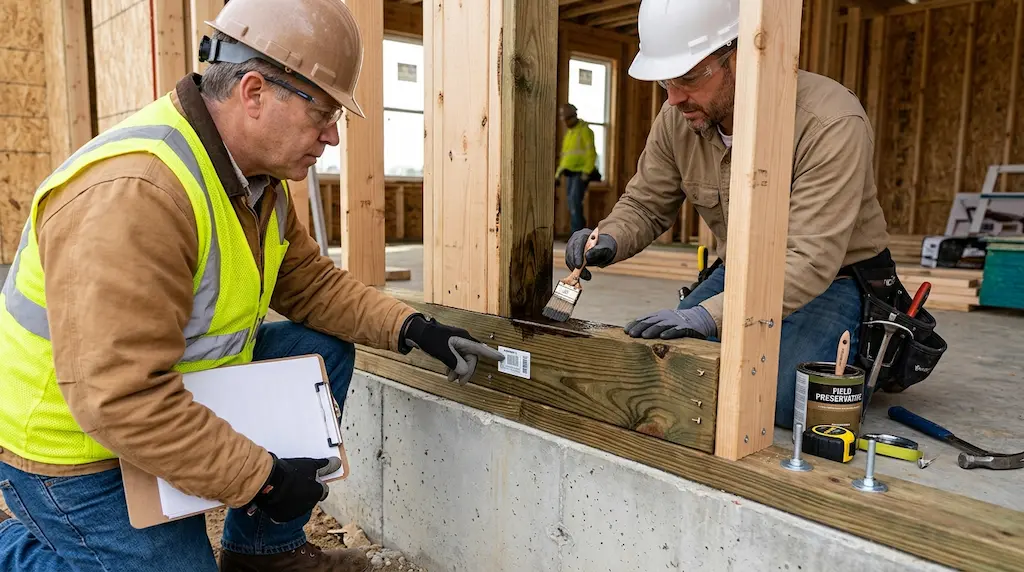
- Apply a topical field-preservative to every cut end and drilled hole before installation.
- Choose a penetrating sealant over a surface film for framing that will stay hidden behind drywall.
- Wait for the recommended drying period before painting visible treated surfaces.
- Re-inspect sealant coverage at any point where plumbing or electrical penetrations were added later.
| Surface Condition | Recommended Treatment | Reapplication Interval |
| Cut ends, drilled holes | 2% copper naphthenate or borate solution | At time of cut |
| Exposed interior framing | Penetrating sealant | Once, before enclosure |
| Visible painted trim | Primer rated for treated lumber | Per manufacturer label |
What Are the Precautionary Measures for Safely Using Pressure-Treated Wood?
Safe handling starts before the first cut and continues through final inspection. Most exposure risk comes from sawdust and unsealed cut ends rather than the finished, installed board sitting inside a wall cavity.
- Wear gloves and eye protection when cutting or drilling treated lumber.
- Vacuum or wet-sweep sawdust instead of dry-sweeping it into the air.
- Wash hands before eating, drinking, or smoking after handling treated boards.
- Store offcuts away from areas where children or pets play.
- Never burn treated wood scraps in a stove, fireplace, or open fire.
| Do | Don’t |
| Seal every field cut before enclosure | Leave cut ends untreated behind drywall |
| Use galvanized or stainless fasteners with copper treatments | Mix standard steel fasteners with ACQ or CA-C lumber |
| Verify the end tag. Use Category matches the application | Assume all treated boards suit every indoor location |
| Clean sawdust with a vacuum or wet method | Dry-sweep sawdust into open indoor air |
How Do Regional Factors Change Indoor Treated Wood Requirements?
Regional termite pressure and humidity levels change which Use Category a builder must specify, even for the same framing detail. The Termite Infestation Probability map referenced in the 2021 IRC divides the country into zones ranging from very heavy to none-to-slight risk.
● Highest-Pressure Termite Zones
Gulf Coast states, Florida, southern California, and Hawaii sit in the highest-pressure termite zone, where local amendments often extend treated-wood requirements beyond standard sill plates into broader interior framing.
● High-Humidity and High-Water-Table Areas
High-humidity regions and areas with elevated water tables push more framing into the UC2 damp-interior category instead of UC1 dry-interior.
● Flood-Prone County Amendments
Flood-prone counties frequently carry local amendments that raise the treated-wood elevation requirement on subflooring, overriding the standard dry-interior exemption in the base IRC language.
● Climate and Foundation Variances
A crawlspace in a coastal climate needs a different specification than a slab-on-grade home in a dry inland region, even under the same statewide code.
● Plan Reviewer Criteria
Vapor barrier presence, foundation type, and average relative humidity all factor into whether a plan reviewer accepts UC1 lumber or requires the heavier UC2 rating for the same framing detail.
● Local Authority Jurisdiction
Local Authority Having Jurisdiction amendments can require inspection documentation beyond what the base IRC language specifies.
Should You Use Pressure-Treated Wood Indoors?
The right preservative, matched to the correct use category and installed to code, makes treated lumber one of the most dependable materials available for indoor framing. Skipping that match invites failed inspections, corroded fasteners, and warranty claims years after the drywall goes up. Getting the specification right on paper, and getting it inspected correctly on site, is where the Lumber Estimator team earns its keep on every estimate it prepares.
Frequently Asked Questions
Is pressure-treated wood safe for indoor framing?
Yes. Borate and copper-based preservatives are EPA-registered for interior use. Older arsenic treatments were phased out in 2003. Always check the end-tag before installation.
Can I use pressure-treated wood for interior trim?
Avoid it for trim occupants touch often. Preservative chemicals sit inside the fibers. Use untreated wood with a protective finish for visible surfaces instead.
Does pressure-treated wood need special fasteners indoors?
Copper-based treatments need galvanized or stainless fasteners. Standard fasteners work fine with borate-treated lumber. Always check the preservative type first.
What Use Category applies to sill plates on concrete?
Sill plates resting on concrete need at least UC2 treatment. This covers occasional dampness and condensation. Code inspectors verify this during rough-in.
Can I burn scrap pressure-treated wood?
Never burn treated wood scraps indoors or outdoors. Burning releases concentrated preservative chemicals into smoke and ash. Dispose of scraps through regular waste collection.
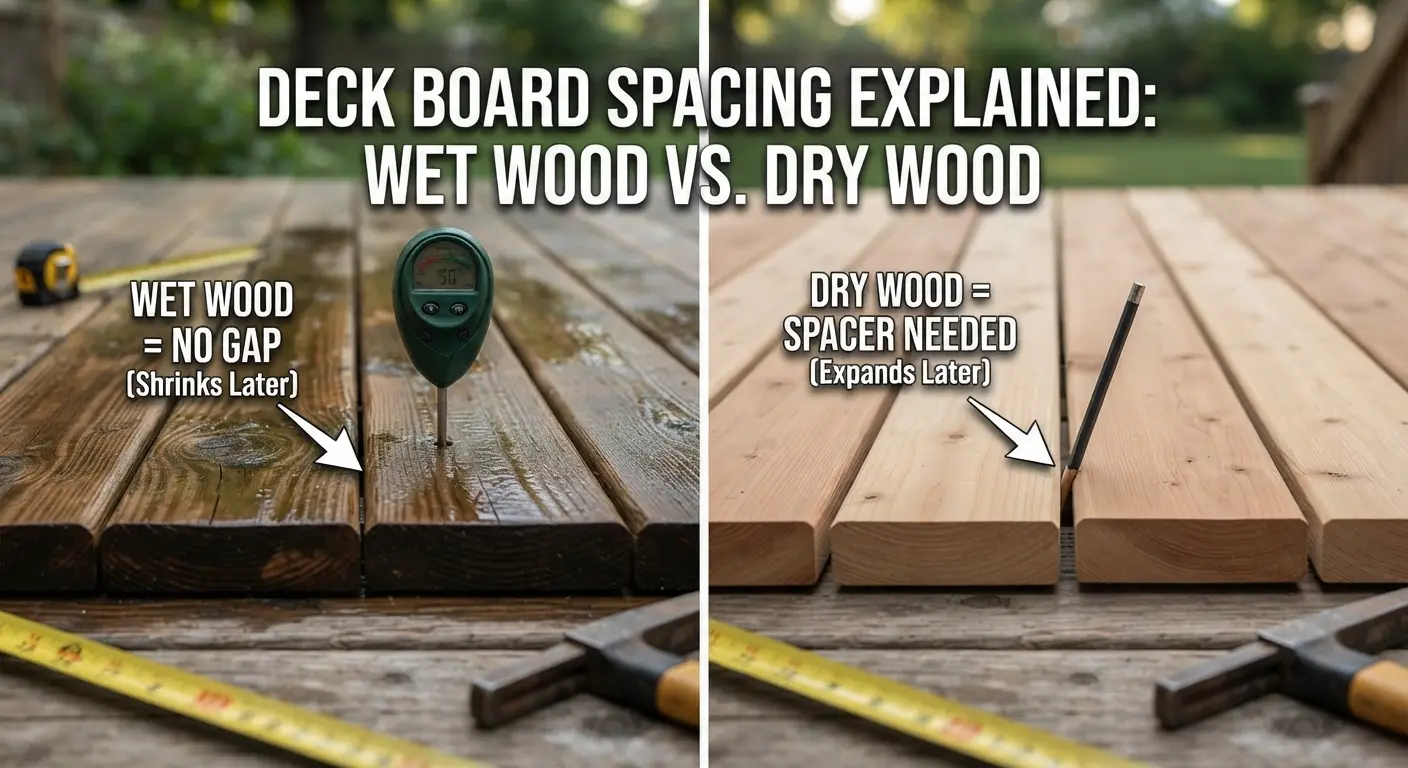
Read More: Deck Board Spacing