
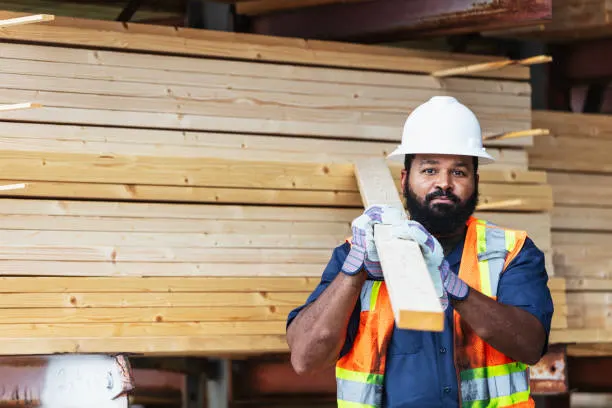
Have you ever stood in the lumber aisle staring at two stacks of wood that look almost identical but are priced differently? That is pressure-treated lumber sitting next to its untreated twin. Most people buying it don’t actually know why the difference exists. It is one of the most widely specified building materials in North America. Yet what happens to that wood before it reaches the yard stays a mystery to most buyers.
In this guide, you will learn what pressure-treated lumber actually is and how manufacturers produce it. You will also explore the different preservative chemistries used today and where it fits into residential and commercial construction. Continue reading to learn all about this building material.
What Is Pressure-Treated Lumber?
Pressure-treated lumber is softwood lumber that has been chemically treated so it won’t rot or get eaten by insects. It is no different from an untreated board of the same grade and species if we talk about its strength. What actually changes is how it holds up against moisture over time.
Leave untreated wood outside, and it will usually start rotting within a few years, especially anywhere it is touching soil. Treated lumber can go decades in those same conditions because the preservative doesn’t just sit on the surface. That is the reason it has become an essential building material in certain spots.
How Lumber Is Pressure-Treated: The Process Explained
Pressure-treated is not just a label slapped on for marketing. It describes the actual manufacturing process. This pressure treatment involves a lot more than most people picture. Here is roughly how a batch moves through a treatment plant:
- First, kiln-dried lumber gets loaded into a steel treatment cylinder. Some of these run well over 100 feet, depending on the plant.
- The cylinder seals shut and a vacuum pulls the air out of the wood cells. This vacuum opens up the fiber structure so it is ready to absorb liquid.
- Then comes the pressure stage itself. A water-based preservative solution floods the cylinder with 100 to 175 psi of hydraulic pressure that forces that solution deep into the cell structure.
- After that, a second vacuum cycle draws off whatever solution is left on the surface, which cuts down on drip and makes the boards easier to handle. Plants also pull sample boards and run assay tests to make sure the retention level matches spec for that batch.
- Some lumber then gets kiln-dried a second time. It helps cut down on shrinkage and warping once it is installed; you will see this labeled KDAT. Air-dried treated lumber skips that step. That is why it is cheaper, but it carries more moisture and needs more time to settle before you build with it.
The whole cycle takes a few hours per batch, a lot more than the quick dip or brush-on coating you’d get from a can of preservative at the hardware store.
Types of Preservatives Used in Pressure-Treated Lumber
The chemistry here has shifted a lot over the past two decades. Up through 2003, most residential treated lumber used chromatid copper arsenate (CCA). This preservative includes arsenic, as the name shows.
The EPA phased CCA out of residential use at the end of 2003 over arsenic exposure concerns. It has not vanished entirely and still turns up in industrial and agricultural applications. But it is not what is going into a backyard deck or fence post anymore.
What replaced it is a lineup of copper-based preservatives that don’t carry the same exposure concerns:
| Preservative | Common Name | Typical Use | Notes |
| Alkaline Copper Quaternary | ACQ | Decks, fences, general framing | Widely available, effective against rot and insects |
| Copper Azole | CA-B / CA-C (sometimes marketed as MCA) | Decks, posts, ground contact lumber | Lower copper content than ACQ, comparable protection |
| Micronized Copper Azole | MCA | Decks, structural lumber | Copper particles are micronized for deeper, more even penetration |
| Borate (SBX/DOT) | Borate-treated | Interior framing not exposed to weather | Protects against insects and decay but leaches out with prolonged water exposure, so it is not for ground contact or outdoor use |
Copper-based preservatives are harder on standard steel fasteners than the old CCA formulas were. That shift alone is why fastener choice became such a bigger deal after 2003, and it is worth understanding before you build anything with treated lumber; it will cost you later if you don’t.
Treatment Levels and Use Categories
Not every treated board gets the same dose of preservative. The American Wood Protection Association (AWPA) sets the industry standard, currently AWPA U1-25. It defines Use Categories (UC) that spell out how much retention a board needs based on where it is going.
| Use Category | Application | Typical Retention | Common Uses |
| UC3A / UC3B | Above ground | Lowest | Deck boards, railings, fascia, trim |
| UC4A | Ground contact, general use | Moderate | Fence posts, deck posts, joists near grade |
| UC4B | Ground contact, heavy duty | Moderate-high | Structural members, high-decay climates |
| UC4C | Ground contact, extreme duty | Highest (ground contact) | Foundation-grade posts, severe exposure |
| UC5 | Marine, saltwater immersion | Highest overall | Docks, marine pilings |
In practice, most general contractors mainly deal with two of these.
- Above-ground lumber costs less and carries a lighter preservative load. It is fine for railings, balusters, and decking boards that get good airflow and are not touching soil.
- Ground-contact lumber runs roughly double the retention and is required anywhere wood is buried, embedded in concrete, or sitting within about six inches of grade.
A few years back, AWPA revised the U1 standard to widen what actually counts as “ground contact” for code purposes. So now certain components can fall under the higher retention requirement even when they are technically above the dirt. Using above-ground lumber where ground-contact was actually called for is one of the more expensive mistakes on deck jobs. It tends to fail right where it is hardest and costliest to get at and repair.
Getting the treatment level right on paper is one thing and getting the quantities right on order is another. If you are working out board footage across mixed above-ground and ground-contact runs, you can hire Lumber Estimator to avoid over- or under-ordering.
Lumber Grades vs. Treatment Level
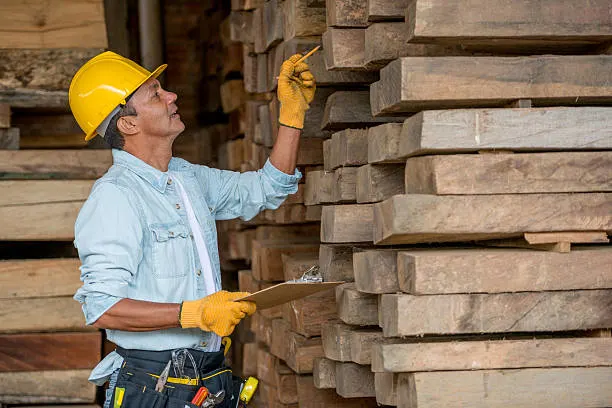
Treatment level and lumber grades get confused constantly, so it is worth spelling out clearly. Treatment level is about preservative retention, while grade level is about the wood’s structural and visual quality and the two have nothing to do with each other.
| Grade | Appearance | Typical Use |
| Select | Few knots, smooth surface | Visible railings, trim, exposed decking |
| No. 1 | Moderate defects, solid strength | Framing where appearance still matters |
| No. 2 | More knots, still structurally sound | General framing, joists, most construction lumber |
| Utility / Standard | Lower appearance grade | Blocking, hidden framing, non-visible structural use |
How to Identify Pressure-Treated Lumber
Whether you are buying new stock or inspecting something already built, there are a handful of reliable ways to tell if lumber has been treated.
- The end tag is your best bet. It is stapled on and lists the treating company, the preservative used, the retention level, and the Use Category.
- The color of lumber also tells about whether any treatment was applied to it or not. Fresh treated lumber usually has a slight green or brown tint from the preservative, though that fades with weathering over a year or two.
- Some species, like Douglas fir, don’t take up preservative as readily as southern yellow pine, so mills cut small incisions across the surface to help it soak in.
- Occasionally you will see an ink stamp instead of a tag, marked “PT” or referencing the standard right on the face of the board. And on an older structure with no tag in sight, common sense works fine. Anything touching or close to soil should be treated lumber if the job was built to code.
Where Building Codes Require Pressure-Treated Lumber
Most U.S. jurisdictions run on the International Building Code (IBC) that directly points to AWPA standards for treated wood requirements. Generally, code calls for treated lumber in situations like:
- Wood in direct or near contact with soil, including posts, footings, and sleepers.
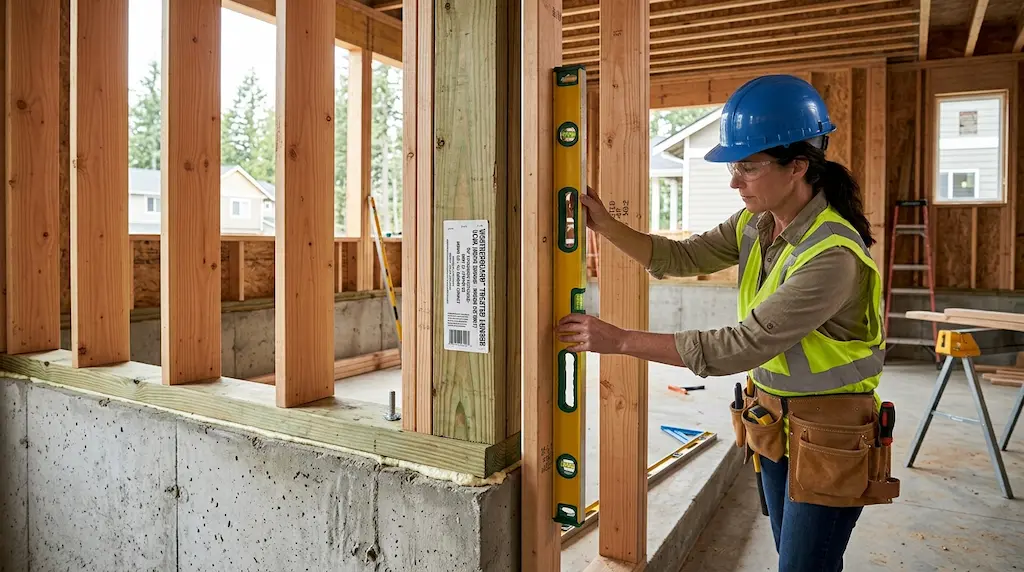
- Sill plates and framing resting on concrete foundations, slabs, or masonry.
- Anything within roughly 6 to 8 inches of final grade.
- Deck ledgers, joists, and structural members that fall under the updated ground-contact provisions.
- And wood embedded in or supporting concrete.
Local amendments vary quite a bit, so don’t assume a standard spec holds everywhere. Check with your building department first. Coastal and high-humidity jurisdictions in particular sometimes bump the retention requirement above the baseline IRC language.
Fasteners and Hardware Required for Pressure-Treated Lumber
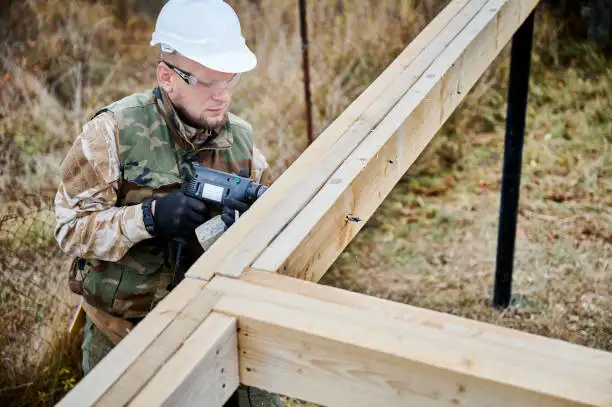
Since modern preservatives lean on copper, they speed up corrosion in plain or electro-galvanized steel fasteners. This won’t show up on day one. It shows up two or three years later as rust streaks, weakened nail withdrawal, and eventually a connector that fails.
For anything built with treated lumber, that means hot-dip galvanized (HDG) fasteners and connectors rated for ACQ and copper azole contact, or stainless steel where you are dealing with coastal air or high humidity. Structural connectors should be specifically labeled as compatible with treated lumber.
It is a small substitution, and it is one of the most common, most entirely avoidable points of failure on treated-wood decks and fences.
Moisture Content and Installation Practices for Pressure-Treated Lumber
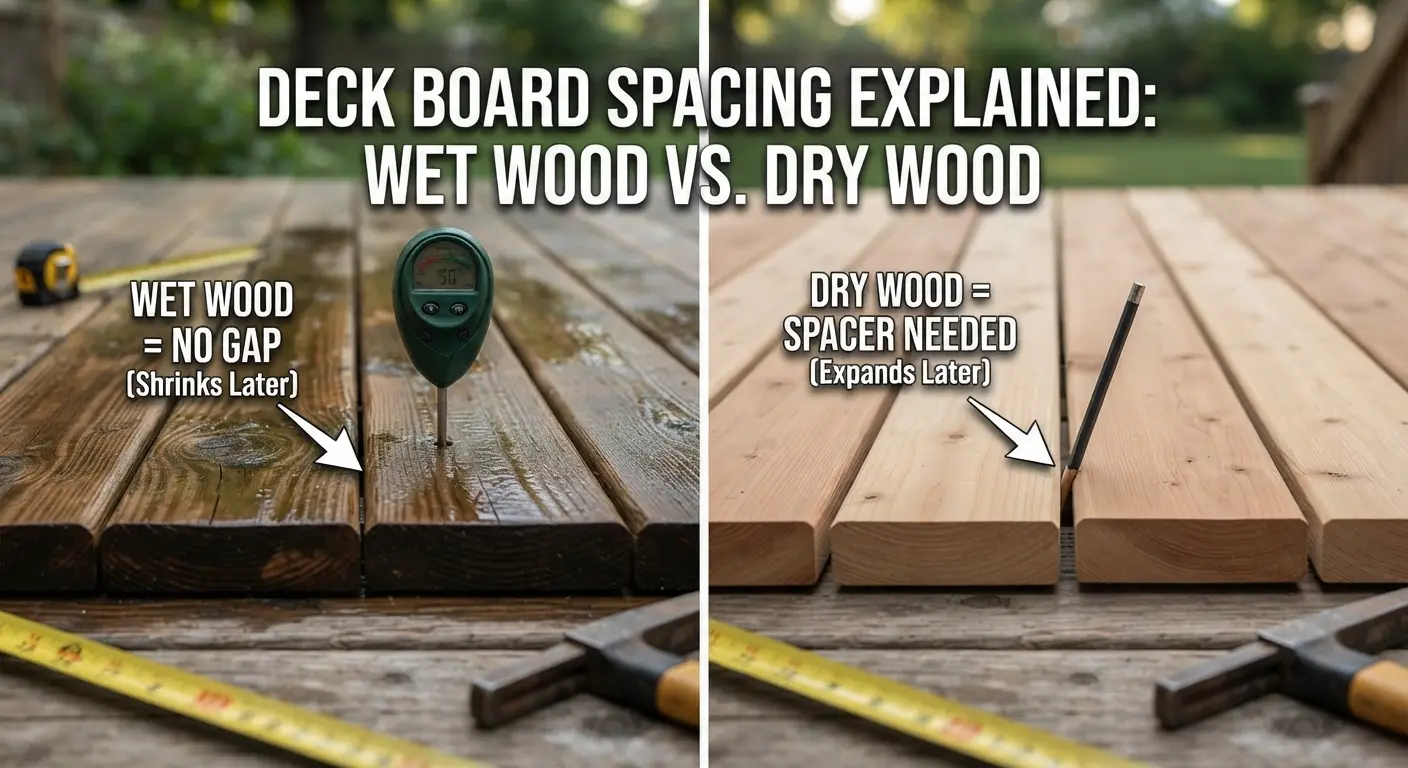
Freshly treated lumber holds a significant amount of moisture from the treatment bath. It will shrink slightly and can twist as it dries out over the following months.
A few practical steps reduce these problems:
- Let boards acclimate on site for a few days before installation when the schedule allows it.
- Leave small gaps between deck boards (roughly 1/8 to 3/16 inch depending on board width and climate) to account for shrinkage.
- Seal the cut ends of posts, especially where they will be set in concrete, since factory treatment doesn’t fully penetrate a fresh cut.
- Avoid staining or sealing immediately after installation. A simple water-bead test (splash water on the surface; if it beads up, it is still too wet to finish) is a reliable field check.
Lifespan and Maintenance of Pressure-Treated Lumber
How long pressure-treated lumber lasts depends heavily on installation quality, climate, and maintenance. With regular care, treated structures commonly last 20 to 40 years. Without maintenance, expect a shorter service life, particularly on decking boards exposed to direct sun and standing water.
| Maintenance Task | Recommended Frequency | Why It Matters |
| Cleaning/washing | Annually | Removes mildew, dirt, and organic buildup that traps moisture |
| Sealing or staining | Every 1–3 years | Slows moisture absorption and UV degradation |
| Inspecting fasteners | Annually | Catches corrosion before connectors fail |
| Checking post bases | Every 2–3 years | Ground-contact areas degrade faster than above-ground members |
| Re-sealing cut ends | At time of any modification | Factory treatment doesn’t reach fresh cuts |
Pressure-Treated Lumber vs. Other Decking and Framing Materials
Pressure-treated wood is not the only option for outdoor construction, and it is worth understanding where it fits relative to the alternatives.
| Material | Upfront Cost | Maintenance | Typical Lifespan | Best For |
| Pressure-Treated Lumber | Low | Moderate to high | 20–40 years with upkeep | Framing, substructure, budget decks |
| Cedar / Redwood | Moderate to high | Moderate | 15–25 years | Visible surfaces, natural appearance |
| Composite Decking | High | Low | 25–30 years | Low-maintenance deck surfaces |
| Tropical Hardwood (Ipe, etc.) | High | Low to moderate | 30+ years | Premium, high-durability decking |
Pressure-treated lumber remains the default choice for anything structural and for code compatibility, even on projects where the visible decking surface is composite or hardwood.
Why Pressure-Treated Lumber Still Matters in Construction
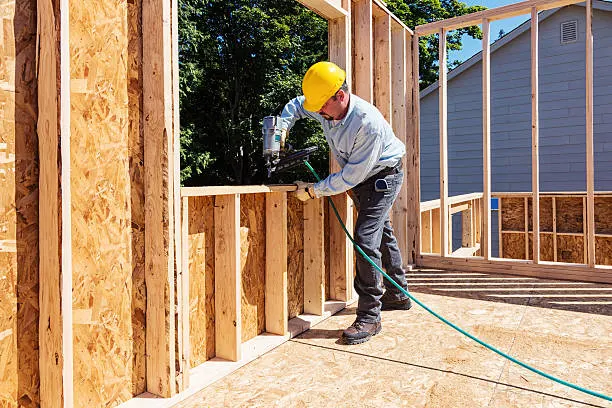
Composite and hardwood decking get a lot of the attention these days, but treated lumber still runs the structural side of outdoor construction. A 2026 market analysis from Mordor Intelligence puts the global wood preservatives market at roughly USD 3.17 billion in 2026, growing at a 4.46% CAGR through 2031, driven mostly by residential construction and infrastructure renewal.
That demand shows up on job sites, too. A 2026 decking industry analysis published on Bar chart puts pressure-treated softwood at roughly 60% of all residential deck square footage installed across North America. And on the standards side, AWPA’s current U1-25, adopted through 2025 and still in active use in 2026, remains the reference every U.S. code points back to for retention levels and Use Categories.
Put it all together and the takeaway’s pretty straightforward: even as finish materials diversify, pressure-treated lumber stays the backbone of outdoor structural work. It is code-compliant, affordable, and backed by a standard that has been maintained and refined for decades.
Conclusion
Pressure-treated lumber is not hard to understand once you know the basics. Preservative chemicals are pushed into regular softwood using vacuum and pressure. The amount of chemical retained in the wood decides if it is good for above-ground use or direct contact with the ground. Modern copper treatments need corrosion-resistant fasteners to work well.
Picking the grade, treatment level, and hardware makes a big difference. It is what keeps a deck or fence lasting for years without breaking down too soon. Whether you are a contractor planning a job or a homeowner buying your first set of posts, the most important thing you can do is check the end tag on the wood. Make sure it matches the job you are doing. That one step can save you trouble later.
FAQs
Is pressure-treated lumber safe to use around vegetable gardens?
Yes, copper-based preservatives like ACQ and copper azole are considered safe for raised garden beds. However, some gardeners still prefer cedar or a plastic liner as a precaution.
Can I use above-ground treated lumber for a fence post?
No. Fence posts sit in or near soil that puts them in the ground-contact category. Using above-ground rated lumber there significantly shortens its service life.
Why does pressure-treated lumber sometimes look green?
The green or brownish tint comes from the copper in the solution. It is cosmetic. It fades with weathering and doesn’t affect the wood’s structural performance.
How long should I wait before staining a deck?
Typically a few weeks to months. It depends on climate and whether the lumber was kiln-dried after treatment. A simple test is splashing water on the surface. If it beads up instead of soaking in, the wood is not dry enough to finish yet.
Does pressure-treated wood need special screws or nails?
Yes. Copper-based preservatives corrode steel fasteners over time. That is why hot-dip galvanized or stainless steel hardware rated for treated lumber is required for any structural connection.