

Picking a picnic table sounds easy. Then you measure your yard. Suddenly, things take a turn. A table that looks small in a store can eat up half your patio. Get the picnic table dimensions wrong, and problems follow. Benches wobble, and walkways get blocked. The table just doesn’t fit right.
This guide gives you the real numbers. You’ll learn the standard sizes, how to count seats, and which material lasts. Small details matter too, like legroom and space around the table. Most guides skip these parts. This one won’t.
What Are the Standard Picnic Table Dimensions?
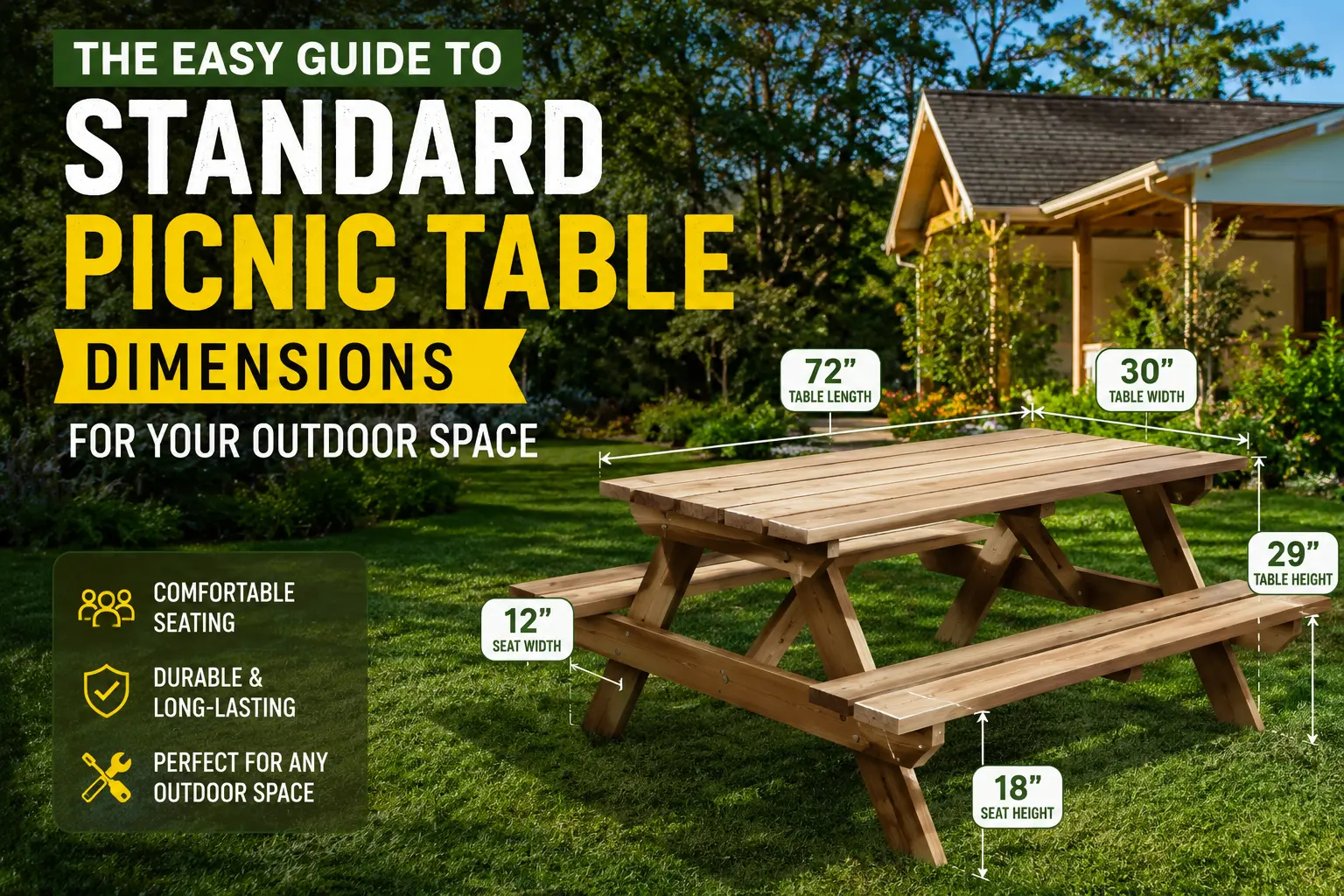
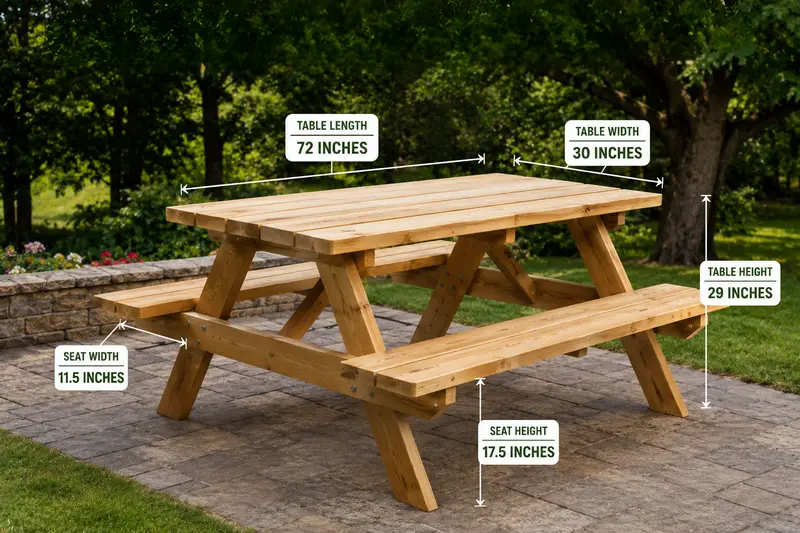
The standard picnic table measures 6 feet long, 30 inches wide and 30 inches high. These dimensions can fit into most backyard designs. It comfortably accommodates six adults. The seats measure 17 inches from the ground, while there is an opening between the seat and tabletop that ranges from 10 to 12 inches. This measurement is more significant than many people think.
Key points to remember regarding the standard measurements include:
- Standard size: 6 feet long, 30 inches wide and 30 inches high – This is the standard dimension used by the industry.
- Seating comfort: The seating sits 17 inches above the ground, while the distance to the tabletop is 10 to 12 inches.
- Small space: A 4-foot picnic table will perfectly fit a balcony or a very small patio. It comfortably seats four persons.
- Big groups: An 8-foot table keeps the same height and width. It just adds length. That extra length seats eight to ten people.
- Climate changes things: Coastal areas get more rain and flooding. Tables there often sit a bit higher off the ground. Snowy areas raise the base, too. This keeps wood away from wet, frozen dirt.
None of these numbers is random. Each one solves a real problem. A table too short leaves knees banging the frame. A table too tall makes kids dangle their feet. Getting this right from the start saves headaches later.
What Factors Should You Consider When Choosing a Picnic Table Size?
Three questions matter most. How many people will use the table? How much space do you have? What will you use it for?
Maybe it’s daily family dinners. Maybe it’s big weekend cookouts. Maybe guests only show up now and then. Each answer points to a different size.
Matching Table Size to Available Yard Space
Yard space trips people up more than anything else. A table might fit on paper. Then you add a grill. You add a walking path. Suddenly, there’s no room left.
Always measure first. Measure twice, even. Don’t buy the table, then hope it fits.
Permitting Rules for Permanent Installations
Some tables get bolted to the ground. That’s common in parks or shared spaces. Many cities have rules about this. A permit might be required, even for something as small as a picnic table.
Check your local rules first. Do this before you pour any concrete. Skipping this step can cost you time and money later.
Soil Type and Footing Depth
Soil type changes how deep a footing needs to be. Sandy soil shifts easily. It needs a deeper footing to hold steady. Clay soil swells and shrinks with rain. That means footings need extra depth, or a layer of gravel underneath for drainage.
Skip this step, and your table may lean or wobble within a year.
A Simple Planning Workflow
Here’s an easy order to follow when planning a table purchase or build:
| Measure your space |
↓
| Count your expected guests |
↓
| Check local building or permit rules |
↓
| Pick table shape and size |
↓
| Choose material based on climate |
↓
| Confirm clearance space around the table |
↓
| Order lumber and hardware |
Follow this order. It stops you from buying something that won’t fit or won’t pass local rules.
How Much Seating Capacity Do You Need?
There’s a simple rule for seating. It’s called the two-foot rule. Each adult needs about two feet of bench space. That’s enough room to sit without bumping elbows.
A 6-foot table gives three feet of bench per side. That seats three adults per bench. Six people total.
Seating Math for Larger Tables
An 8-foot table gives more space per side. It fits four adults per bench. That’s eight people total. Some families add extra guests by seating kids closer together. Kids simply need less room than adults do.
Round Tables Have Different Seating
Round tables work differently. A 5-foot round table usually seats six people. Everyone spaces out evenly around the edge.
This shape works great for conversation. Nobody sits at the “head” of the table. Everyone faces each other instead of sitting in a row.
One Big Table or Two Small Ones?
Big groups don’t always need a big table. Two smaller tables often work better. They’re easier to move around. They’re easier to clean. And they skip the extra framing that a giant single table needs to stay sturdy.
Think about how you actually use your space before committing to one huge table.
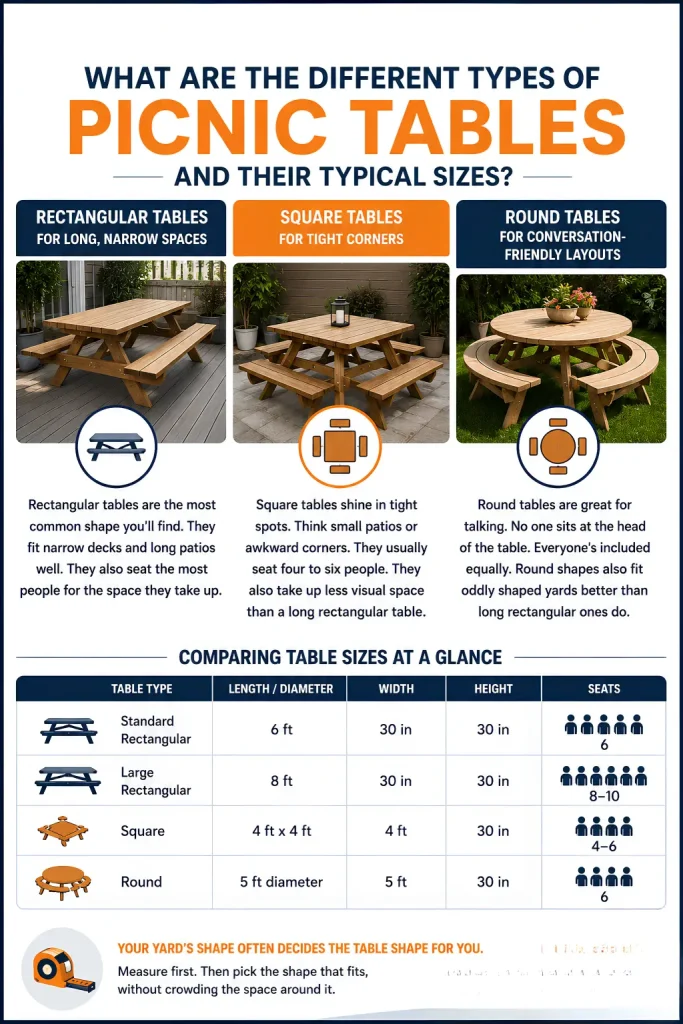
What Are the Different Types of Picnic Tables and Their Typical Sizes?
Picnic tables come in three main shapes. Rectangular. Square. Round. Each shape fits a different space and a different group size.
Rectangular Tables for Long, Narrow Spaces
Rectangular tables are the most common shape you’ll find. They fit narrow decks and long patios well. They also seat the most people for the space they take up.
Square Tables for Tight Corners
Square tables shine in tight spots. Think small patios or awkward corners. They usually seat four to six people. They also take up less visual space than a long rectangular table.
Round Tables for Conversation-Friendly Layouts
Round tables are great for talking. No one sits at the head of the table. Everyone’s included equally. Round shapes also fit oddly shaped yards better than long rectangular ones do.
Comparing Table Sizes at a Glance
Here’s how the standard sizes stack up:
| Table Type | Length/Diameter | Width | Height | Seats |
| Standard Rectangular | 6 ft | 30 in | 30 in | 6 |
| Large Rectangular | 8 ft | 30 in | 30 in | 8–10 |
| Square | 4 ft x 4 ft | 4 ft | 30 in | 4–6 |
| Round | 5 ft diameter | 5 ft | 30 in | 6 |
Your yard’s shape often decides the table shape for you. Measure first. Then pick the shape that fits, without crowding the space around it.
How Much Does a Picnic Table Cost in 2026?
Prices swing a lot. Size matters. Material matters. Even your location matters. In 2026, most people will spend somewhere between $150 and $2,500 on a table.
Picnic table cost depends heavily on the material you pick. Wood, metal, and composite each price out very differently.
Cost by Table Size
A 6-foot table costs less than an 8-foot one. It simply uses less wood and less hardware. Bigger tables also cost more in labor if you hire someone to build or install it.
Round tables often cost slightly more than rectangular ones with similar seating. That’s because the angled cuts and extra framing underneath take more work.
Cost by Material Type
Material drives the price more than anything else. Pressure-treated pine stays the cheapest choice. Composite and metal cost more upfront. But they need less upkeep down the road.
Here’s a look at average 2026 prices, broken down by material and size:
| Material | 6-ft Table | 8-ft Table | Round Table |
| Pressure-Treated Pine | $150–$300 | $250–$450 | $200–$400 |
| Cedar/Redwood | $300–$600 | $500–$900 | $400–$700 |
| Aluminum/Coated Steel | $400–$800 | $700–$1,200 | $500–$900 |
| Recycled Plastic/Composite | $600–$1,200 | $900–$1,800 | $700–$1,400 |
Big commercial tables can cost even more. Some reach $2,500. These are usually reinforced composite models, made for heavy public use, with anchoring hardware built in.
Regional Cost Factors That Change Your Price
Where you live shifts your final cost. Coastal areas often push prices up. The tables there need rust-proof hardware. They also need wood treated for salt air.
Seismic zones add cost too. Anchored tables in these areas need stronger bolts. They need extra bracing to pass inspection.
Shipping adds up in remote areas, especially for heavy metal or composite tables. Lumber prices shift by region as well. A cedar table might cost less out west than it does in the Midwest.
DIY Versus Store-Bought Pricing
Building your own table can cut your cost in half. That’s true if you already own basic tools. But there’s a catch. You need the right amount of lumber.
Order too much, and you waste money. Order too little, and your project stalls halfway through. Getting an accurate lumber count matters just as much as picking the right design.
What Is the Ideal Legroom and Bench Height for Maximum Comfort?
Comfort comes down to one gap. It’s the space between the bench and the tabletop. The standard gap is 10 to 14 inches. That’s enough room for adult knees, without banging into the frame above.
Standard Bench Height for Adults
Most benches sit 17 inches off the ground. That matches a normal dining chair. Go lower, and adults feel awkward sitting down. Go higher, and kids’ feet dangle in the air.
Adjusted Sizing for Children’s Tables
Kids’ tables use smaller numbers all around. A children’s table usually stands 24 inches tall. Benches sit around 12 inches high. This keeps small feet flat on the ground. That helps posture. It also just feels more comfortable during meals.
Knee Clearance for Accessible Tables
Accessible tables need special care. ADA guidance calls for at least 27 inches of knee clearance. That space needs to be at least 19 inches under the table.
This lets a wheelchair user roll close enough to reach the top comfortably. Skipping this measurement makes a table unusable for many people.
Common Mistakes When Measuring for a Picnic Table (And How to Avoid Them)
Most mistakes happen for one reason. People measure the table. They forget the space around it. A table needs room for benches, walking paths, and nearby furniture too, not just its own footprint.
Forgetting Clearance Space Around the Table
Clearance space gets skipped more than anything else. Someone measures the length and width. Then they forget the benches stick out another foot once people sit down.
Ignoring Uneven Ground
Uneven ground causes trouble too. A table might look perfectly level inside a store. Put it on a sloped yard, and it wobbles badly. Check your slope before buying. Adjustable feet or a leveled base can fix small slopes.
Skipping Permit Checks
Permits get overlooked a lot, especially for anchored tables. Some cities require a permit for any permanent structure. Even a bolted-down table in a shared yard counts. Skip this step, and you risk fines or having to remove it later.
Overlooking Seismic Bracing Requirements
Earthquake zones need extra thought. Anchored furniture there often needs stronger bracing. It needs anchor bolts rated for side-to-side movement, not just weight pressing down.
Blocking Walkways or Doorways
Bench overhang causes problems near doors and paths. A table placed too close to a doorway can block foot traffic completely once someone sits down and pulls a bench out.
How Much Clearance Space Do You Need Around a Picnic Table?
Plan for 36 inches of clearance on every side of the table. That’s enough room to walk around it. There’s enough room to pull benches out. There’s enough room to sit down without bumping a fence or wall.
Extra Clearance for Wheelchair Access
Wheelchair spaces need more room than that. ADA guidance suggests at least 60 inches of clear space beside an accessible seat. That gives enough room for a wheelchair to turn and get into position at the table.
Coastal Airflow and Clearance Needs
Salty, humid air changes things near the coast. The furniture there needs more space around it for airflow. Good airflow helps wood dry out faster after rain. That cuts down on rot over time.
Sketching Your Footprint Before You Build
Planning a permanent table? Sketch the full footprint first. Include all the clearance space, not just the table itself. This one step saves time. It also saves you from an expensive resize later.
Which Picnic Table Material Lasts Longest Outdoors?
Material changes everything. It changes how long a table lasts. It changes how much upkeep it needs. It changes how well it survives your local weather.
Pressure-treated pine is the cheapest choice. It lasts 10 to 15 years if you seal it regularly.
Cedar and Redwood for Natural Rot Resistance
Cedar and redwood cost more to start. But they naturally resist rot and bugs, without any chemical treatment. These woods often last 15 to 20 years. That holds true even in wet, humid climates, with very little upkeep needed.
Metal Tables for Coastal Durability
Metal tables, usually aluminum or coated steel, handle salty coastal air better than plain wood does. With a rust-resistant coating, these tables last 15 to 20 years. One downside: they get hot fast under direct summer sun.
Composite Materials for Low Maintenance
Recycled plastic and composite materials need the least upkeep of all. They resist warping. They resist cracking. Bugs don’t bother them either. These tables often last 20 to 25 years without any sealing or staining at all.
Material Comparison for Table
| Material | Lifespan | Maintenance | Best For |
| Pressure-Treated Pine | 10–15 years | Annual sealing | Budget builds |
| Cedar/Redwood | 15–20 years | Occasional oiling | Humid climates |
| Aluminum/Coated Steel | 15–20 years | Rust checks | Coastal areas |
| Recycled Plastic/Composite | 20–25 years | Minimal | Low-maintenance yards |
Think about your local climate before picking a material. Coastal builds need rust-proof hardware. Cold climates need wood rated for freeze-thaw cycles, so it won’t crack every winter.
Getting the lumber amount right for a custom build isn’t easy to guess. A residential lumber estimating service can figure out exact board footage for you. That cuts down on waste. It keeps your whole project on budget, too.
Building the Right Table Starts With the Right Numbers
Picking a picnic table size isn’t just flipping through a catalog. It’s about matching the table to your yard. It’s about matching it to your guest count. Climate matters too. So do your local building rules.
Get these numbers right from the start. Your table will fit well. It’ll work the way you need. And it’ll last for years without problems.
Planning a custom build? Accurate lumber estimates make all the difference. A precise estimate from a lumber estimating company leads to a smooth project. Skip it, and you risk a costly reorder halfway through. Get your board footage calculated correctly before you cut a single piece of wood.
Frequently Asked Questions
What height should a children’s picnic table be?
Children’s tables typically stand 24 inches tall. Bench seats sit around 12 inches high. This keeps kids’ feet flat on the ground.
Do round tables save space compared to rectangular ones?
Round tables often fit awkward corners better. Rectangular tables seat more people for the same amount of yard space, though.
Can I use pressure-treated wood near the coast?
Yes, but pair it with rust-resistant hardware. Salt air speeds up the rusting of metal fasteners much faster than inland areas do.
What’s the average lifespan of a picnic table?
Lifespan ranges from 10 to 25 years. It depends on the material, upkeep, and how rough your local climate gets.
Is a 6-foot or 8-foot table better for most backyards?
A 6-foot table fits most standard backyards well and seats six people. An 8-foot table works better for larger patios or bigger groups.