



Your deck should be more than a rinse over. Thanks to the knowledge of properly applying pressure washing to your wooden deck, you will be able to revive the beauty of nature and preserve the wood framework. In the circumstances where dirt, moulds, and algae are not considered, outdoor wooden surfaces may be weakened over time as long as cleaning is not considered. Consistent and due cleaning makes the deck safe, clean, and appealing to the eye.
The appropriate pressure washing technique can be used to avoid expensive destruction. Excessive pressure may bleach wood fibers to leave permanent marks on the surface. Meanwhile, soft cleaning removes destructive contents accumulated over time. Washing aids also in the preparation of the surface in the event that you intend to use a stain or protective coating in the future.
Investment security is achieved when you follow safe pressure washing. A properly maintained deck is longer lasting, and it will need fewer repairs. Clean decks also have more appeal when it comes to the curb as well as more comfort in living out of the home for the family and the guests.
Why Do Most Decks Wear Out Faster Than They Should?
Most decks do not get killed because of a lack of proper cleaning of these decks by the owners. Dirt builds up fast. In damp corners, there is the growth of mold and mildew. Boards are dangerous and slippery due to algae. This eventually builds up and wears down wood fibers shortening the longevity of your deck. This is the reason why one should understand how to pressure wash their wood deck properly.
The greater part of the homeowners are sure that the solution to all the problems lies in high pressure. However, in too much, the protective fibers are peeled off and the gouges will be visible. Softwood like cedar can be scarred even at 2500 + PSI. It is therefore important to ensure that deck surfaces are well and meticulously pressure-washed.
Deck washing services are one of the most popular exterior services that are ordered in professional cleaning companies annually. Owners of homes have heavily invested in the outside area and they worry about protecting their investments.
At Lumber Estimator, this deck cleaning guide is directed towards the safety, accuracy, and durability. We describe proper levels of PSI, proper technique, and clever times to maintain.
Our Expert Says That:
Our safe and proven approach has been developed by reviewing manufacturer guidelines, contractor best practice and industry cost information.
Why Proper Deck Pressure Washing Matters?
Your deck is exposed to the sun, rain, dirt and foot traffic daily. Enhance the deck with a smart cleaning plan to protect it. The advantages of pressure washing the deck surfaces are much more than the appearance. Regular cleaning also supports long-term wood durability before you move to advanced finishing methods explained in how to picture frame a wood deck.
Angi states that homeowners have decks pressure-washed every 12 months. The process ensures that the life span of wood is prolonged, and the cost of repair is minimized because of this yearly practice. Actually, deck cleaning is one of the major services sought by exterior contractors in residential houses. Homeowners know that it is more expensive to replace than to prevent.
Then what is the frequency of pressure washing deck boards? Start with once a year. Nonetheless, clean more often in damp climates or shaded places. Wetness accelerates the growth of moulds. Traffic also requires care to be done more often.
Being a deck maintenance plan, a simple deck maintenance schedule makes your outdoor location robust and sound. Use this yearly plan:
- Annual Deck Maintenance Timeline
- Spring: Inspect boards and pressure wash
- Summer: Light surface clean if needed
- Fall: Check sealant and touch up stain
- Winter: cover furniture, and clear up
Choose the Right Tools and Equipment for Deck Pressure Washing
Select the Best Pressure Washer for Deck Cleaning
The quality of cleaning and protection of the wood greatly depends on the use of the best pressure washer when cleaning the deck. The machine does not harm natural wood fibers and leaves dirt, mold, and algae, but leaves them removed. Begin cleaning at low pressure always. Then press gradually in case of stubborn dirt.
The suggested PSI for wood deck surfaces remains 500 to 1500 PSI for the majority of residential decks. Above 2500 PSI pressure can scar softwood boards and damage grain structure. The proper technique ought to provide the strength needed in cleaning rather than excessive force.
Moderate pressure and a wide fan nozzle can be used to minimize losses on the surface of wood. Master’s never initiates complete cleaning before spray pressure has been tested on some hidden deck area.
Keep in mind one basic rule of cleaning. Move the pressure washer wand steadily. Always keep a distance from the surface. Only water flow and not forcing water into wood fibers should clean the dirt.
Best Pressure Washer Nozzle for Wood Decks
The nozzle of the pressure washer used on wood should be wide in the spray. Most residential decks are suitable with a 25 to 40 degree fan tip. Large angles of spray evenly spread water pressure on wooden boards.
Begin washing with an 8 to 12-inch distance between the surface and the washing. Maintain the movement of the nozzle. Do not keep the spray at the same position since a stationary spray can cause damage to the wood fibres.
Cedar and other softwood decks need to be sprayed with a milder spray. Hardwood decks can be used in a slightly more pressure setting. Surface texture should always be checked after washing the tests to find out that the wood fibers are smooth.
| Wood Type | Safe PSI Range | Nozzle Tip | Distance |
| Cedar | 500-1200 PSI | 40° | 8-12 inches |
| Pressure-treated Pine | 1200-1500 PSI | 25°-40° | 10-12 inches |
| Hardwood (Ipe/Mahogany) | 1200-1500 PSI | 25° | 12 inches |
Professional Equipment Tips
Choose electric pressure washers in case the place to be cleaned is very compact and domestic, as they are light and can easily be handled. When working on spacious outdoor areas where it is necessary to clean a lot of space, it is better to select gas-powered models.
Wash the sprays in a horizontal motion. Wear safety glasses and protective gloves always. The risk of repair is addressed by the quality tools and improves the effectiveness of cleaning. Begin cleaning at a low pressure. It is then time to work safely and professionally on the deck surface.
Step-by-Step
How to Pressure Wash Your Wood Deck Safely?
To have the best results use a step-by-step pressure washing deck. Clean slowly with the ability to move on the surface. It is cleanable when it is prepared well. It also does not destroy good finers. If you are considering long term decking upgrades or material choices then you may also explore details about how much composite decking costs in 2026.
Another important thing to know is how to prepare the deck before staining, in case you need it to be stained in the future. Stain absorbs on clean surfaces evenly. This increases the color depth and permanence and proper cleaning extends the coating too.
Step 1: Clear and Inspect the Deck
- First, remove furniture from the deck. Sweep dust and leaves away. Check boards carefully.
- Observe any loose nails, cracks, or broken wood. Wash clothes afterward by fixing their structural issues. A weak spot in the cleaning pressure can be increased.
- First, remove furniture from the deck. Sweep dust and leaves away and check the boards carefully. Observe any loose nails, cracks, or broken wood. Wash clothes afterward by fixing their structural issues. A weak spot in the cleaning pressure can be increased.
- Check railings and stairs as well. Dirt hides in corners and clean up spaces that have debris.
- Take this step seriously. During washing, inspection eliminates possible accidental damage of wood.
Step 2: Apply Deck Cleaner
- Use a deck safe cleaning solution in case of the occurrence of mold or mildew. Concentrate on slippery sports or dark spots.
- Allow the cleaner to rest on the surface between 10 and 15 minutes. This waiting period assists in breaking dirt bonds.
- Apply a soft brush to the persistent stains. Scrub lightly and do not scratch wood fibers.
- Rinse the cleaner residue and then start pressure washing.
Step 3: Set Proper PSI Pressure
- Begin with low-pressure settings. Test water spray on hidden wood.
- PSIS should be raised gradually, should it be? Stay within safe wood ranges.
- Most residential wood decks have a recommendation of less than 1500 PSI, recommended by experts.
- Excessive pressure ruins the grain structure. Therefore, control pressure carefully.
Step 4: Wash With the Wood Grain Direction
- Clean the pressure washer wand in a different direction. This minimizes marking of surfaces.
- Maintain the motion of the nozzle. Always place the spray in one place.
- Maintain 8-12 inches distance from the surface.
- Clean using smooth and long strokes. Work section by section
- The direction of cleaning may raise wood fibers against the grain.
Step 5: Rinse the Deck Evenly
- Wash the surface, then dry off.
- Avoid leaving cleaning detergent residue.
- Spray a small amount of oil over the deck.
- To avoid lap marks, by overlapping cleaning paths by some slight distance.
- Surface texture of checks after being rinsed.
Quick Reminder
- Test pressure before full cleaning.
- Wash in the morning or evening.
- Avoid hot, sunny weather when cleaning.
- Keep spray angle consistent.
Drying Time Before Staining Your Deck
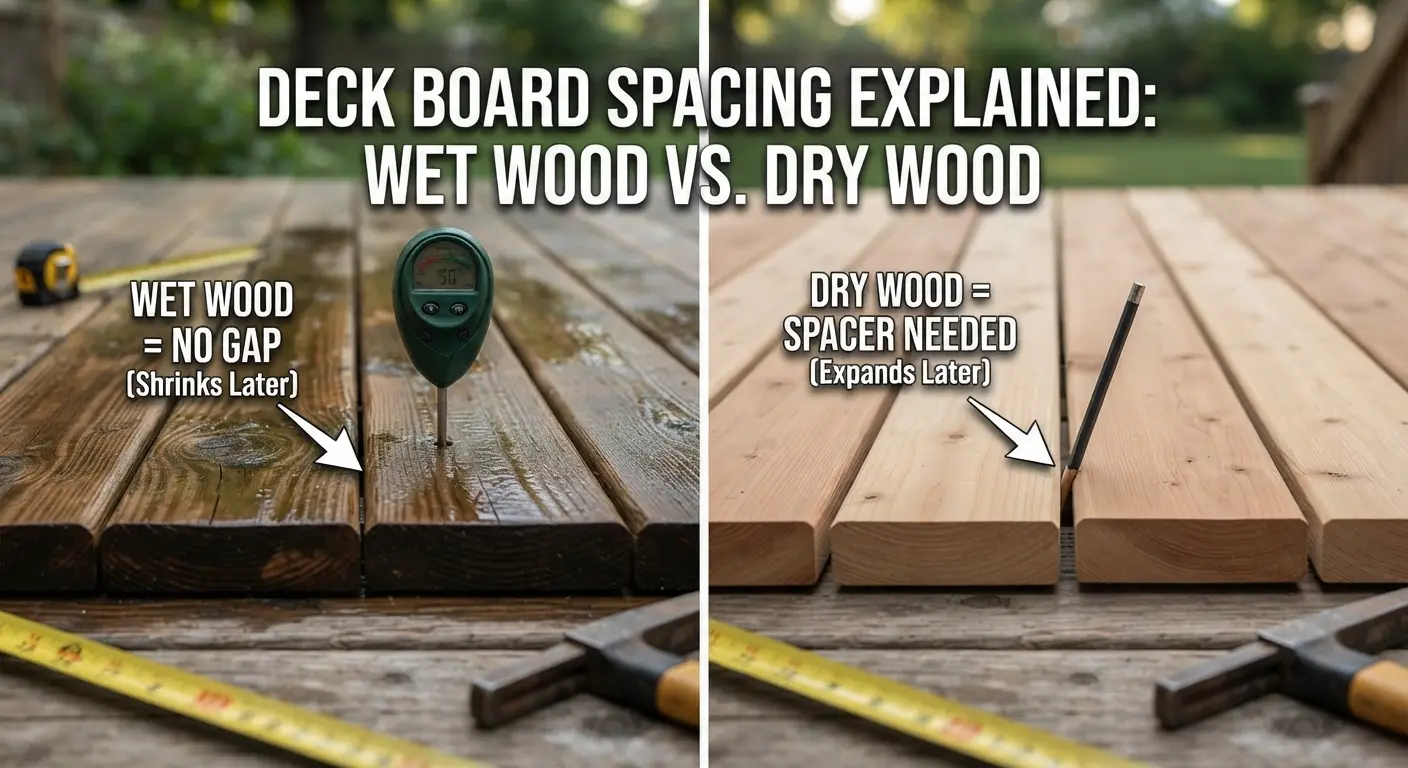
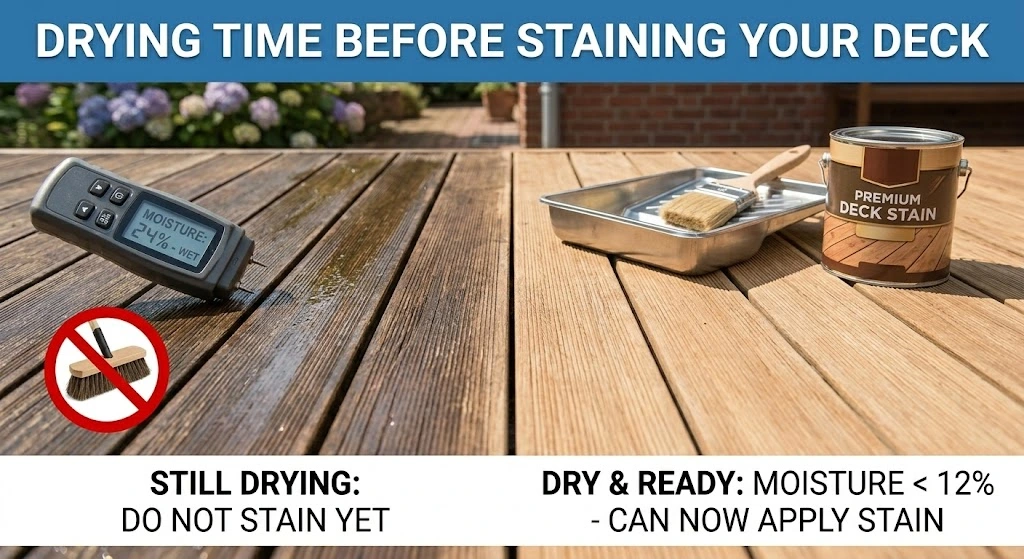
Understanding how long to wait before staining the deck after pressure washing is important in producing long-term results. Poor staining is caused by rushing the staining. Wetness enclosed in wood undermines the strength of the coating. Thus, the quality of finish is enhanced by patience.
The drying time of the deck after a wash is determined by weather, type of wood, and the airflow. The average time it takes to dry most decks is 24-72 hours. The moisture is checked by professionals before staining. They want a moisture level below 15% so that the stain is most likely to be absorbed.
The homeowners tend to do staining after having been well dried. Exterior maintenance services are also still sought after since good finishing prolongs the life of wood. It is widely advised that a moisture meter should be used before staining by many professionals.
Hardwood decks may require up to 96 hours of drying time in humid climates. Thick wood takes a long time to absorb water. Hot sunny days assist in quicker drying. Results also get better through air circulation. Maintenance costs vary. Approximately $100-$250 as the average cost of deck cleaning and preparation services basing on the size and condition of the deck.
Understanding Deck Pressure Washing Costs
The knowledge about the cost of pressuring the deck surfaces assist homeiwners to budget wisely. The prices vary according to the size of the deck, they pay of dirt, and the quality of the services. Local market rates and labor time also influence total cost.
The majority of professional services are handled on a per-project or per-square-foot basis. Smaller decks are generally cheaper since the time taken for cleaning remains short. More equipment and work are needed on larger decks.
Cleaning of the deck is not only aesthetic. It also prevents moisture damage, mold growth, and surface decay of wood. Cleaning is an investment that can be made to have a longer deck life.
Example Cleaning Cost Estimates
Small Deck Cleaning
- The deck is approximately 300 square feet and requires less time and effort.
- Cleaning alone can be expensive at $100 in most areas.
- With the stain preparation work, you can get up to approximately $250-$400.
- Small decks are less cumbersome to clean, and workers finish them faster. Transport of equipment remains easy.
Medium to Large Deck Cleaning
- There is a deck of around 700 square feet that requires additional work.
- Only cleaning services can cost approximately $250.
- Complete cleaning and stain application may cost more than $1500 based on labor quality and the quality of the material.
- Large decks are difficult to preesurize and take more time to dry. Surface condition is normally inspected by professional contractors.
- Choose quality services instead of the lowest price. Wood structure is guarded by proper cleaning. Stain finish and outdoor looks are also enhanced with good preparation.
So get a quote or book a meeting for your purpleheart wood lumber project today!
Common Pressure Washing Mistakes That Damage Wood Decks
Pressure washing is helpful when done correctly. Nevertheless, minor mistakes may cause severe harm. A lot of people who own homes are seeking pressure washing mistakes so that they do not have to spend a lot of money on repairing their homes.
Yes, will pressure washing harm the deck surfaces of wood? Yes implies that you apply too much pressure or apply the wrong technique. Wood fibers are soft. Powerful water flow may rip through surface grains and decrease the life of decks.
The damage to the surface by use of improper washing techniques is frequently discussed on home improvement forums like DIY Stack Exchange. Experts will always suggest regulating cleaning pressure and the right spray motion.
Using Pressure Above 2500 PSI
- The pressure that should be used on wood decks is not safe beyond 2500 PSI. Natural fibers are stripped off by high pressure.
- The softwoods, such as cedar and pine, are the most affected by overworking. Begin cleaning with low-pressure cleaning.
- To make fine adjustments in case of dirt. Nor is force quality cleaning.
Holding the Nozzle Too Close
- Hold the distance of the nozzle to the deck surface 8-12 inches.
- This is because keeping the spray too close ruins the wood grain. It will also leave visible lines on boards.
- Move the wand continuously. That which is sprayed must not be concentrated on a single spot.
Washing Against the Wood Grain
- One must always wash perpendicular to the grain of the wood.
- Direction against the grain cleaning raises the surface fibers.
- Fiber-reinforced surfaces render the deck surface rough and weak.
- Natural structure is safeguarded by smooth movement
Staining Wet Wood
- Wet wood should never be stained after pressure washing.
- Stain absorption is inhibited by a wet surface.
- A majority of decks require sufficient drying time to be completed.
- Tolerance enhances the coating strength.
Skipping Sanding of Raised Fibers
- Sometimes the small wood fibers are carried off by pressure washing.
- The coarse texture is fixed with the light sanding.
- The best result will be with fine-grit sandpaper.
- Sanding assists in the even penetration of the stain.
Expert Contractor Tips for Safe Deck Pressure Washing
Wood structure is guarded by professional cleaning techniques and increases the life cycle of the deck. Learn about the contractor-style of learning how to pressure wash your wood deck. Incident on safety, pressure control, and effective preparation of the surface. These are professional hints that adhere to the contractor maintenance and manufacturer guidelines.

Always Test Pressure in a Small Area First
Start cleaning by testing the water pressure on a hidden deck section. Spraying force has a response to different wood types. Testing aids in knowing how the surface is responding before the commencement of complete cleaning. Most professional contractors start with low-pressure washing and then increase the strength of the spray. Such an approach will inhibit unintentional damage to fibers and marking of surfaces.
Use a Wide Fan Tip Nozzle
When cleaning wooden decks, use a large spray angle nozzle. Fan tip nozzles spread the pressure of water equally on the surface of boards. Focusing on narrow spraying tips can be very destructive to the wood fibers. Experts usually recommend 25° to 40° spray tip angles for residential wood deck cleaning. The movement of sprays should always be constant and even.
Avoid Washing Decks During Mid-Day Heat
The cleaning of the decks is not advisable in the middle of the day. The evaporation rate of water on wood surfaces is increased by high temperature. High drying may produce disproportional cleaning and discoloration of the surface. Mornings or evenings are better for cleaning time. Lower temperature aids in ensuring high consistency when it comes to moisture control during washing.
Sand Lightly If Wood Fibers Lift
Pressure washing sometimes lifts tiny wood fibers from the deck surface. In the event of roughness of the surface, after cleaning, do light sanding with sandpaper of fine grit. Light sanding enhances the smoothness of texture and stain penetration of wood. This can be done particularly before the application of protective finishing covering. Understanding wood characteristics is also helpful when working with Softwood Lumber. Different wood types respond differently to cleaning, sanding, and finishing methods.
Consider Oil-Based Stains for Better Protection
Oil-based wood stains tend to go deeper into wood. Intensive penetration enhances water and weatherproofing. The oil-based products are also popular among many professional contractors because they have a long-term service. When using stain materials, always use the instructions as provided by the manufacturers.
Professional Quality Statement
According to the standards of maintenance of contractors and all the recommendations of the deck manufacturers, controlled pressure washing, appropriate drying time, and surface preparation assist in prolonging the lifespan of the deck and preserving its natural beauty as wood.
Deck Maintenance Schedule for Long-Lasting Protection
Regular maintenance keeps your deck strong, safe, and visually attractive. An easy schedule can be used to ensure wood is not exposed to moisture, dirt, and weather damage. Wooden surfaces that are used outdoors require regular maintenance to remain strong.
Annual pressure washing of your deck is a good practice for most homeowners. Cleaning gets rid of mold, algae, and surface dirt. Checks are done on fasteners every six months to maintain structural stability. Loose nails or screws may also make the deck weak over time.
Re-staining your deck is done every 2-3 years to enhance its moisture resistance and to maintain the appearance of natural wood. Solar and rain-resistant products of high quality. The integrity of roof boards, railings, and loading should be inspected once a year.
| Task | Frequency |
| Pressure Wash | 1x per year |
| Inspect Fasteners | Every 6 months |
| Re-stain | Every 2–3 years |
| Structural Inspection | Annually |
FAQs
How long should you wait to stain a deck after pressure washing?
The majority of decks require 24-72 hours to dry after pressure washing. The decks could be made of hardwood, or if the weather is wet, they take time to dry. It is very important to ensure the level of moisture in wood is checked before applying stain. Professionals tend to cover the contents of moisture to less than 15% to ensure good uptake of stain and durability of finish.
Does pressure washing harm a wooden deck?
Yes. When used improperly, pressure washing can harm wood. High pressure, more than 2500 PSI or proximity of the nozzle to the surface can gouge the fibers of the wood. The right technique will avoid marks on surfaces and weakening of the structure. Spray distance should always be maintained, and the wand should be moved at all times during cleaning.
What PSI is safe for pressure-treated wood?
In most cases, 1200-1500 PSI is safe when it comes to pressure-treated wood. Cleaning strength should be balanced by a 25°40° fan tip nozzle. Keep spray distance at 8 to 12 inches off the deck surface. Begin with low pressure of cleaning and then add progressively in case dirt still exists.
What is the price of pressing a deck?
The typical pressure washing price of the deck is approximately $150. Price can be different based on the size of the deck, the dirt, and the place. Average service prices remain between $100-$250 on average residential decks. The preparation of work for bigger decks or staining may add to the overall cost.
Is it necessary to sand using pressure washing?
Light sanding can be used in case the wood fibers stand up after washing. Unevenly, rough surfaces may take up stain. Smoothening with the fine-grit sandpaper. Sanding enhances the penetration of the stain and provides a cleaner and professional finish before coating with a protective layer.